


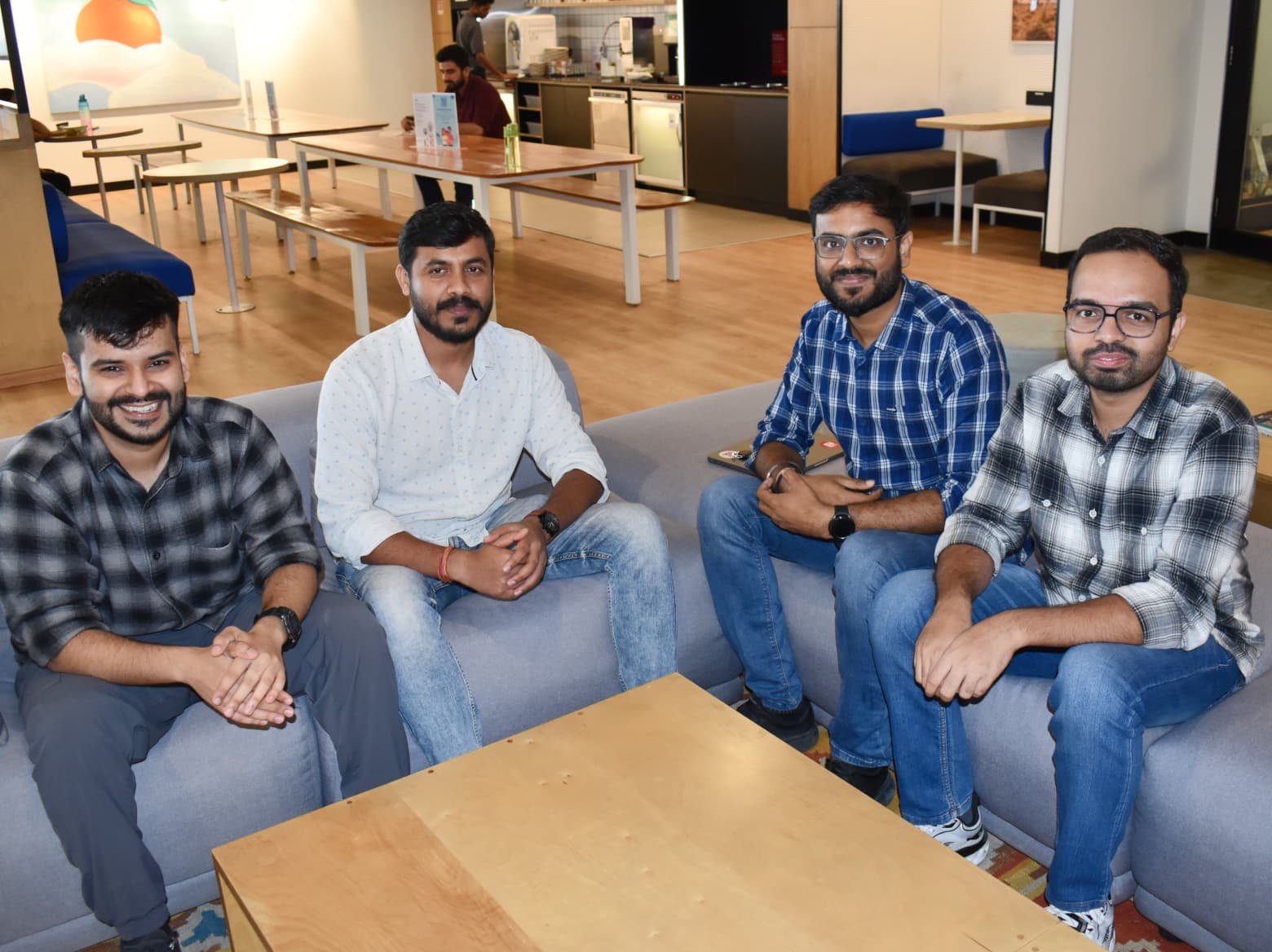
Launched in 2018, PayPay has grown into a mobile payment service with 65 million users (as of August 2024), or two in every three smartphone users in Japan. Boasting a diverse team, PayPay now has engineers from about 50 different countries and regions around the world.
The India Dev Speaks series brings you an authentic look into the reality of the unique members of the PayPay India team – that’s PayPay’s overseas development center – straight from their mouths.
This time, we asked members involved in a project segregating the point system from the balance-managing wallet system about the project, the secret to balancing quality and speed, and the appeal of working as an engineer at PayPay India.
Sanchit Goyal
PayPay India Lead Engineer
Hi! I’m Sanchit, from Faridabad, Haryana. Originally interested in designing and developing highly scalable projects, I joined PayPay India in October 2023 on the hunt for opportunities to design solutions and processes from scratch.

Mihir Pathak
PayPay India Software Engineer
I’m Mihir from Amravati, Maharashtra. For the past four years or so, I worked at a telecommunications company based in Tokyo. I became interested in solving problems at scale in the rapidly expanding fintech industry and was impressed by PayPay’s breakneck growth. I joined PayPay India in August 2023.
Ankit Kumar
PayPay India Software Engineer
I’m Ankit, from Hazaribagh, Jharkhand. I was interested to work in the Fintech domain and I wanted to work on a high scalable project. I had worked only in remote environments up through my last job, so wanted to try my hand at an in-office job, which I thought may make it easy to communicate and work. I found PayPay India just as I was looking for such a job, joined in November 2023, and have enjoyed growing together with my colleagues in the office ever since!

Keshav Kant
PayPay India QA Engineer
Hi, I am Keshav from Motihari, Bihar. I joined PayPay India in November 2023. PayPay India is my fourth company, which I sought because I wanted to work at a company that delivers products in the fintech domain.
Table of Contents
What triggered the big project?
Solving the not-so-obvious problems of the wallet system serving ever-increasing users
Sanchit:
The project began to address issues with the wallet system in the PayPay app as the number of users continued to grow. With more users, the existing system became increasingly difficult to manage. To resolve this, the team decided to separate the part of the system that manages point balances and create a new point system.
This move was designed to simplify management while ensuring that users wouldn’t notice any changes in their experience. By making this separation, the team aimed to reduce the overall load on the wallet system. This approach also clarified the roles of each system, making it easier to maintain and operate. Ultimately, the project focused on improving performance and scalability for future growth.

Challenges and Growth Found Only at PayPay India
Tackling a hard mission to continue delivering high-quality products to our users
Sanchit:
In this project, rather than migrating the whole point system out of the wallet system at once, we opted for a phased method in which we migrated gradually, starting from a few percent. In the migration process, we had to think about flows and user lists many times. We also had to manage transactions, which I designed the solution for. We were facing new challenges every day.
Mihir:
Though the point service project did have a predefined deadline it had to be started completely from scratch. Even compared to other areas of the PayPay app, the TPS (Transactions Per Second) of the core “Wallet” module is very high, used by many users day to day. It was quite the challenge for me as a software engineer to design and implement a solution for such a module, from scratch, and with haste. Looking back, there were lots of edge cases like point cancellations, and we ran very robust tests to ensure there were no problems in production. I feel I grew personally through being involved in this project.

Ankit:
I joined the company around the time the design was finalized and the implementation began. There were occasional wallet-related fix requests, and as we communicated closely with the wallet team, my understanding of the feature itself deepened. Also, I was involved in designing things for point grant flows. Though it was such a complex project, we were safely able to implement it and have not seen any issues since, so I feel we fulfilled our duties.
Keshav:
As a QA engineer, I was in charge of test case design, bug life cycle maintenance, writing automation scripts and scheduling jobs/pipeline. When I joined, the preparation was in the very initial phase for testing. For this project after I joined I initiated the preparation required for QA setup and began testing straight away. One example is that, given the release was broken down into steps, there were tons of different test combinations that had to be done – whether a user is migrated, non migrated or in transition – and I had to think of various scenarios and test to ensure the user experience was not impeded in any of them. Looking back, there were tons of challenges, even more so than I’ve mentioned. Such large-scale testing was a great experience.
What led such a hard project to success?
Keshav:
We drove this project after breaking it into several phases, but managing, maintaining, and designing each phase in a consistent way was, in a way, challenging and quite instructive.
Mihir:
It was such a challenging project as an engineer – there was no room for error, which inevitably resulted in the need to build up a high-quality product with all edge cases covered and with a very high speed. Thinking up all possible edge cases and making improvements was tough work, but in the end we successfully segregated the point service end-to-end.
Ankit:
The Japan and India teams worked together to drive this project. I feel our communication with the Japan team went extremely well. Another reason for the project’s success is that a member from the PayPay wallet team came to India for about a month on business, and shared their knowledge on the system and its design, deepening our understanding.
Sanchit:
The point system we built in this project is part of the wallet feature, which manages PayPay balances, and that therefore we can even say is PayPay’s foundation. There was no room for even one yen of mistakes, so we spent plenty of time on building a solid design, Point Backend Team’s effort on code review, QA Team on identifying potential problem areas and testing them all – and thanks to that, there hasn’t been a single critical issue since release. I believe this was possible because at PayPay India, we emphasize building quality products.
Work culture
Balancing Quality and Speed. Creating uniquely at PayPay India
Mihir:
At PayPay, India and Japan teams exemplify effective cross-border collaboration, working seamlessly despite the time zone gap. Japan is ahead by 3.5 hours, yet both teams make the most of this difference, utilizing the overlapping hours to minimize dependencies and keep projects moving forward smoothly.
Engineering teams at PayPay use English as the primary language for communication, ensuring clarity across borders. However, to accommodate any language barriers, translation tools and interpreter support are used whenever necessary, enabling smooth communication and efficient delivery of high-quality projects.
Keshav:
In this project too, to ensure high quality, we had multiple discussions with multiple teams which included teams from both India and Japan to confirm that all flows were covered with no omissions. As a result, we were able to ensure 100% automation coverage of the point service, eliminating the need for manual testing even if there’s a new change, and successfully balancing development speed and quality.
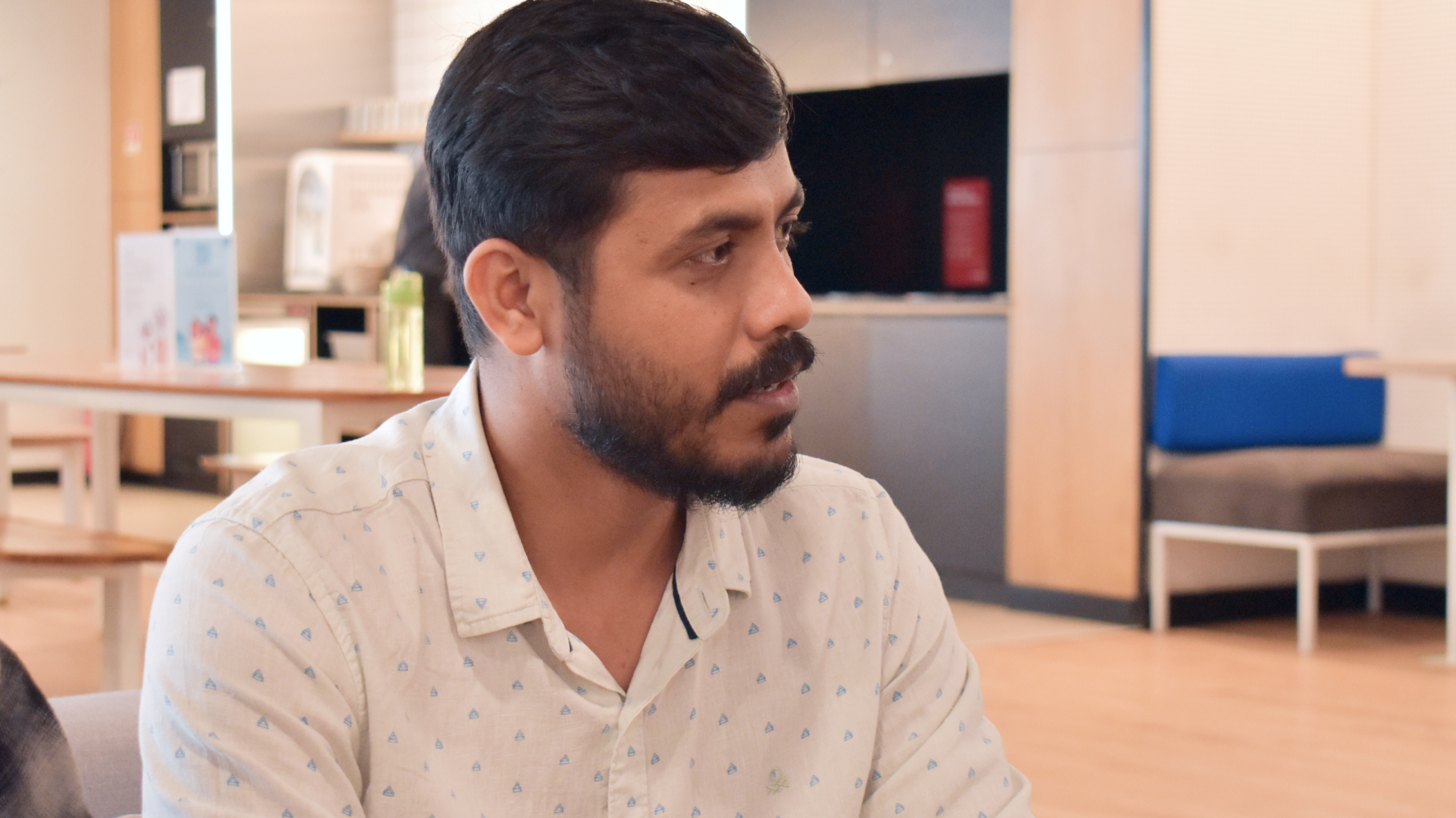
Sanchit:
At PayPay India, we build products on a user-first basis. Everyone is cooperative and wants to contribute to the team, making communication extremely smooth. Even if a problem comes up, we can solve them before you know it. This allows us to build products fast – and that’s the beauty of working face-to-face in the office.
Ankit:
There may be a 3.5 hour time difference between Japan and India, but lots of engineers work late into the night, so are often online at the same time. Often when I post a question at night, the Japan team has already proposed a solution by the time I clock in the next day. This may be another secret to how we balance quality and speed.
A message for Indian developers, please!
Sanchit:
At PayPay India, you can get involved with innovative projects in the rapidly growing fintech domain, and tackle fintech challenges using cutting-edge technologies and influential solutions.
Ankit:
Being a part of this project, I felt just how important quality, and the trust that comes from it, is to Japanese users.
At PayPay, we value our customers the most and hence we develop products that are error-free, high-quality and built quickly and at scale. In this environment, members with diverse knowledge and tech skills come together, command an array of tech, and learn a lot. We would be especially happy to welcome anyone with knowledge or innovative ideas.
Keshav:
All my colleagues at PayPay India are smart and highly knowledgeable. I recommend this company to anyone looking for a culture of getting better together with knowledgeable comrades. Everyone around us is cooperative, and it’s a very exciting environment.
Mihir:
We’re a rapidly growing company where you can always get involved with many projects that lead to your growth. Many engineers joined us in 2023, who are already making significant contributions. I would love for you to join us here, so we can build great projects and improve together.

*Employee affiliations are current as of the time of the interview.