


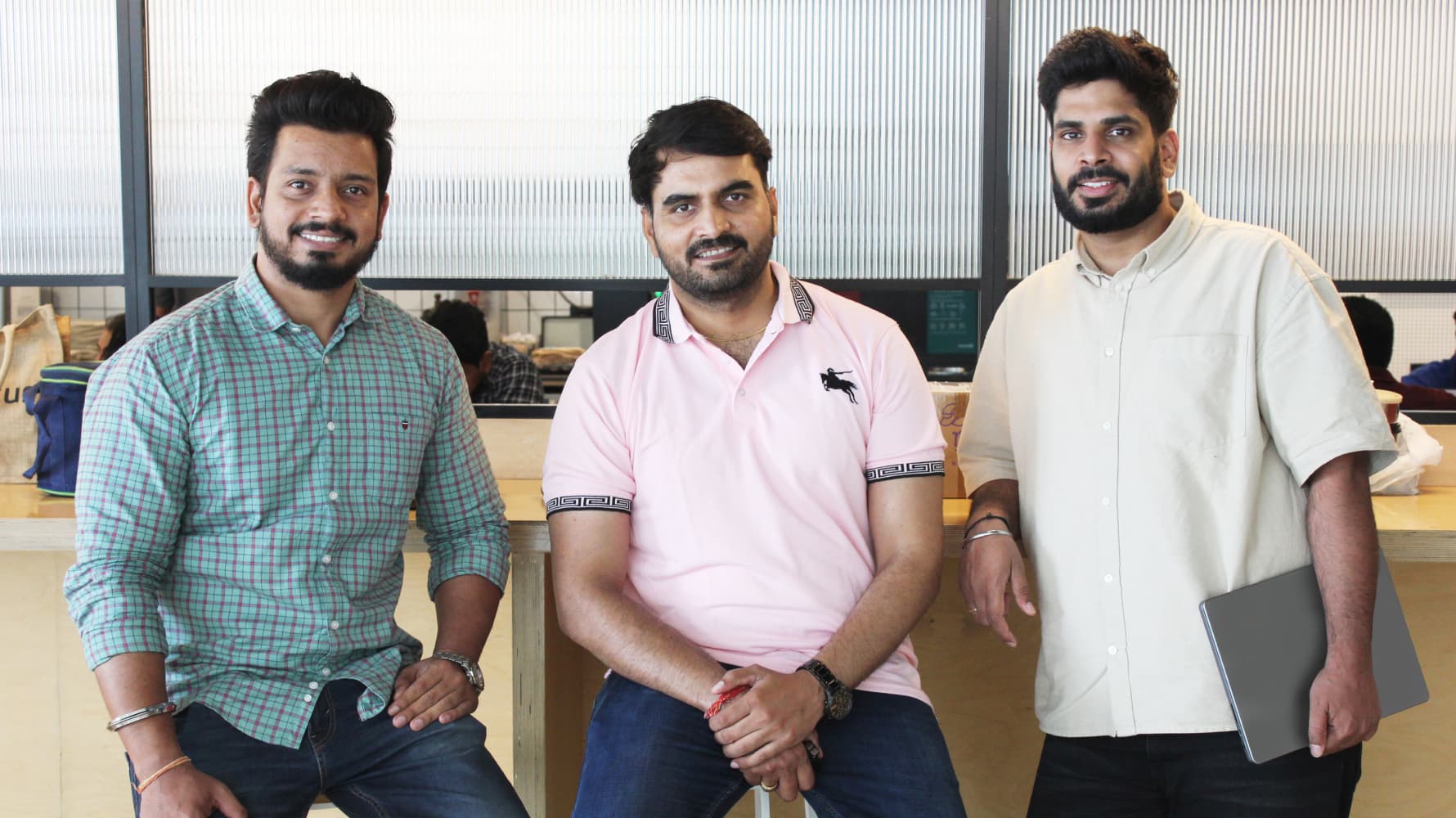

(Vaibhav Singh, Manoj Kumar, Manish Dwivedi).
Let’s start by hearing about your journey to PayPay India. What brought you here?
Vaibhav:
Hi, I am Vaibhav from Lucknow, Uttar Pradesh. I joined PayPay India in October 2023. PayPay India is my fourth company, and I specifically wanted to continue my career in the fintech domain. As a tester, I ‘ve always aimed to enhance product quality and user experience.
Manoj:
I’m Manoj. In my previous role, I worked as a Lead SDET(Software Development Engineer in Test)at Ajio, where I focused on software quality and reliability. I gained valuable experience in Test Automation framework development and process Improvements. After a few years, I was ready for a new challenge and was drawn to PayPay India’s innovative approach to fintech. Its mission of faster deliveries without compromising quality aligned with my values.
Manish:
Hi, I am Manish. I began my journey with PayPay in March 2023 and transitioned to PayPay India in February 2024. I have had wonderful experiences since I joined PayPay. As a member of the QA Technical team, I have collaborated with nearly all the QA teams to address technical challenges, develop new tools, and establish standard architectures, which are integral to my core responsibilities.
Can you each describe your mission and roles within the QA team?
Vaibhav:
As a dedicated QA engineer, my focus is on turning complex challenges into smooth and seamless user experiences. I design tests, manage bugs, and create automation scripts. Initially, I worked with the Gift Voucher team, but over the past seven months, I’ve taken on a key role in the P2P domain. It’s been an amazing journey. Every challenge and success has strengthened my commitment to creating top-notch test script, seamless solutions, driving me to achieve even higher goals.

Manoj:
As a key member of the Notification QA Team, my primary mission is to ensure the robustness and perfect functionality of our notification systems. I lead our testing efforts to consistently meet high quality standards. Daily, I guide the team towards our testing and automation goals and foster a collaborative environment for knowledge sharing.
My responsibilities include developing and implementing thorough testing plans to resolve issues and designing and building automation tools for efficiency. Additionally, I create utilities to support testing and automation, always striving for top-notch quality and continuous improvement while providing technical support to my colleagues.
Manish:
Within the SDET team at PayPay India, my role centers on architecting and implementing comprehensive QA solutions for the entire organization. Operating at the intersection of QA and Development, we proactively address friction points to enhance collaboration. We aim to elevate testing standards and drive efficiency. A key aspect of our work involves strategically managing and improving the QA infrastructure for scalability and reliability. Driven by a mission to overcome limitations, we focus on optimizing QA processes and leading the transition towards a fully automation-centric approach. Furthermore, our team develops innovative tools and frameworks to equip our QA colleagues with advanced resources for maximum efficiency in delivering high-quality software.
What are some recent projects you’ve been involved in?
Vaibhav:
My team played a central role in revamping the P2P (Person to Person) user chat feature for our money transfer function. Our collaborative efforts focused on identifying and resolving critical user journey issues through a structured testing strategy. This included database, timeout, and version-based testing, a first for our team, ensuring comprehensive test coverage.
We also maintained efficient weekly regression tests throughout the migration. This high-priority release, aimed at significant cost savings, benefited from our proactive approach and resulted in zero production issues. Our teamwork ensured a seamless and successful transition while upholding high quality and efficiency standards.
Manoj:
I recently contributed to a crucial initiative to automate timeout testing strategies. This involved automating previously manual timeout scenarios, enhancing the efficiency and reliability of our systems. Timeout testing is crucial for identifying potential critical bugs. This proactive automation allowed us to cover critical areas, reduce manual effort, increase test efficiency, and improve overall system quality. This initiative has now become an indispensable part of our testing framework, playing a crucial role in system stability and quality assurance.
Manish:
Our team is currently involved in several new initiatives that are improving our QA processes:
- Shift Left Approach: We’ve implemented testing at earlier stages, enabling quicker bug identification and a faster QA process. This approach is now used by all PayPay India teams.
- CommonUtilities as Project Dependency: We’ve consolidated common backend testing functions from 6-8 repositories into a single “commonQA” repository, which is now used as a service by our API, Mobile, and Web testing repositories. This streamlines development and maintenance.
- Usage of LLM based techniques for Generative AI Testing: We are using advanced LLM techniques to automate our AI models which is covering around 3,000 manual test within just 15 minutes. which shows a significant improvement over the 30 manual test which could handle in the same time.
- Time Out Testing Using HAProxy: We’ve implemented the simulation of API timeout scenarios by mocking development servers, which was previously not possible, enhancing our testing capabilities.
These completed projects have improved our daily activities and enhanced the overall QA infrastructure with better test coverage.
What do you find particularly interesting about technical development at PayPay India?
Vaibhav:
What’s particularly exciting about development at PayPay India is our constant drive to use cutting-edge technology to enhance user experience and security. Everyone on the team is serious about innovation, and as a result, our products aren’t just efficient, they’re also robust, keeping transactions secure. Plus, our focus on scalability and adaptability means we can effectively meet the growing needs of users in a rapidly changing market. It’s this forward-thinking approach that makes the technological advancements at PayPay India so appealing.
Manoj:
PayPay India offers a vibrant and innovative environment where you can grow both technically and personally. In our technical development, the user-first principle is paramount, ensuring all products and services are designed with user needs as the top priority. In product development, the latest technology is utilized to realize a seamless payment experience, and stability, security, and scalability are emphasized for convenient and reliable services. In our hybrid work environment, open communication is highly encouraged, with team members freely sharing ideas and providing feedback to collectively build excellent products. This commitment to developing innovative solutions based on user needs makes PayPay India a highly stimulating workplace for engineers.
Manish:
PayPay India is a technologically exciting place because we are dedicated to leveraging the latest advancements in our product development to enhance user experience. This philosophy ensures our team members continuously acquire skills to remain competitive in their careers. For instance, if you’re focused on the technologies we use, our QA teams are actively employing AI and LLM-based techniques, Kafka, BrowserStack, GitHub, and CircleCI, among others.
We even hold internal hackathons where anyone has the chance to turn their creative ideas into products. The innovations that arise from this have the potential to be game-changers in modern society, fostering a culture that nurtures creativity and forward-thinking.

Could you tell us about your next challenge aimed at your future growth?
Vaibhav:
As an automation engineer at PayPay, my upcoming challenge is to elevate our automation systems by integrating advanced technologies and methodologies. I aim to enhance our automation framework’s robustness and flexibility, ensuring it can seamlessly scale with our growing user base. A key focus will be incorporating visual testing to improve the accuracy and reliability of our UI tests, ensuring a cohesive user experience across multiple platforms.
Strengthening our existing framework is essential, and I plan to do this by incorporating AI for predictive analysis, enabling proactive issue detection and resolution. This will improve the efficiency and resilience of our processes. Additionally, I will focus on building cross-functional collaborations to align automation goals with business objectives, fostering innovation and agility.
Manoj:
My future challenges focus on two key areas that will significantly contribute to my personal growth and the evolution of my automation capabilities. The first is implementing a user interface (UI) tool specifically for timeout testing and mocking. This tool will allow for easier simulation of network latency and component failures, enhancing our ability to verify application resilience under various conditions. It will enable intuitive and scalable execution of critical timeout scenarios without manual intervention, leading to improved test coverage and reduced turnaround times. The second challenge is adopting proven design patterns within our automation framework. By incorporating these patterns, I aim to build a more robust, maintainable, and productive automation architecture. This initiative will lower maintenance costs and complexity, while improving overall test efficiency. Careful application of these patterns will allow us to confidently scale our automation efforts, making future enhancements smoother and less error-prone. These endeavors reflect a commitment to technical excellence, efficiency, and building a future-ready system, which are essential for long-term growth.
Manish:
As an SDET at PayPay, my primary focus is to empower the entire QA team across both India and Japan by developing innovative tools and integrating cutting-edge technologies, particularly Generative AI. My goal is to streamline QA development workflows, optimize existing processes, and accelerate our delivery cycles. This involves proactive research, strategic implementation, and comprehensive training to ensure our teams are equipped with the best resources to deliver high-quality software at speed. Ultimately, I aim to foster a culture of continuous improvement and technological advancement within our QA organization.
What message do you have for engineers in India considering a career change?
Vaibhav:
Join our dynamic fintech team at PayPay India, where we prioritize scalability, security, and speed! Contribute to India’s rapidly growing tech industry and help us shape the future of finance.
Manoj:
Hey engineers in India! Are you seeking an exciting workplace brimming with opportunities for challenge and growth? Look no further than PayPay India. We offer a fast-paced environment, a global team, and continuous learning programs to keep you at the forefront of technology. We are passionate about delivering innovative solutions to our users. Come join our team – check out our current openings and find your perfect fit!
Manish:
PayPay India is at the forefront of innovation, leading the next wave of technological advancement. Experience a challenging and stimulating environment where your contributions are truly valued. Join us in a dynamic setting that leverages cutting-edge technologies like AI, and let’s thrive together in this rapidly evolving industry. Take your career to new heights and seize the opportunity to contribute to the future of fintech at PayPay India!
Check Here for Career Opportunities!
*Job openings and employee affiliations are current as of the time of the interview.