


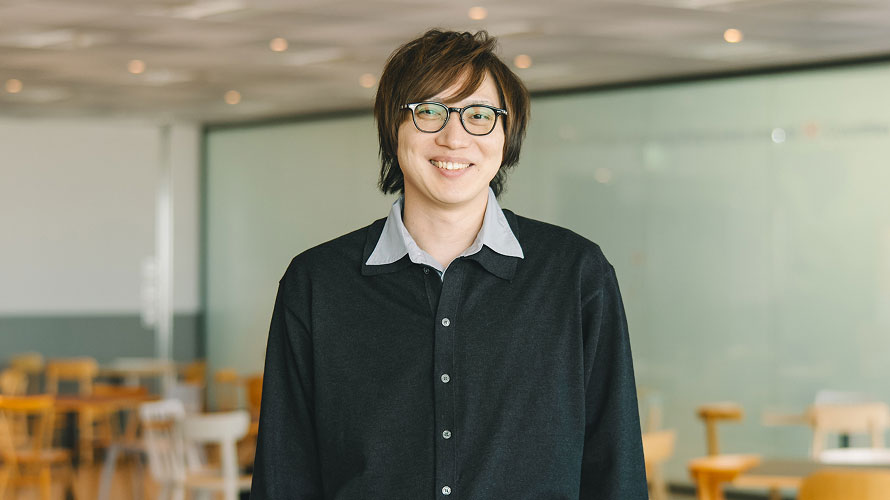
This “Leader Interview” series introduces the people and philosophies driving the PayPay Group forward. In this edition, we spoke with Kenta Mikami, Head of the Growth Product Division within the Technology Group at PayPay Card Corporation.
Kenta Mikami
Head of Growth Product Division, Technology Group, PayPay Card Corporation
He joined Yahoo! JAPAN (now LINE Yahoo Corporation) in 2015. He began his engineering career in the company’s payments and financial services division, contributing to the launch and growth of Yahoo! JAPAN Card, the predecessor to PayPay Card. After playing a key role in establishing PayPay Card, he transferred to PayPay Card Corporation in 2023 when the organization was restructured around product development. Following his tenure as Head of Product Division 1 within the Technology Group, he assumed his current role as Head of the Growth Product Division in April 2025.
The Freedom That Comes with In-House Development
Since joining Yahoo! JAPAN in 2015, I’ve always worked at the intersection of payments and technology. Looking back over the past decade, the biggest turning point for our engineering organization was bringing our core systems fully in-house.
When systems were outsourced, there were clear limits to both speed and quality. Once we internalized development, we gained the freedom to choose what we believed was truly the best. We began to ask ourselves, How can we build scalable architectures that won’t leave technical debt behind? Engineers started making those decisions for themselves — and that’s when PayPay Card’s technology team truly became self-driven.
Of course, it wasn’t all smooth sailing. In the early days, documentation and processes were lacking. Even though the system had been rebuilt internally, business knowledge hadn’t yet taken root among employees. As a result, troubleshooting took longer than expected, and the constant stream of issues was exhausting for everyone.
But those tough, hands-on experiences taught us ownership — that sense of “this is our system.” Those gritty early days became the foundation of our team’s strength today.

Vision: “The Most Seamless Way to Pay, Anytime”
At the Growth Product Division, we’re not simply evolving a credit-card business. Our vision — “The most seamless way to pay, anytime. A smarter, safer PayPay life.” — is the foundation of everything we do.
We want to design a payment experience that feels effortless — one that adapts to sudden expenses, offers fair rewards, and gives users peace of mind. Across five departments — engineering, design, product management, QA, and technical strategy — everyone focuses on a single question: Is this truly the best experience for our users?
This shared vision acts as our compass. Even in an organization of hundreds of engineers, we always come back to the “why” behind what we build. That simple phrase anchors both our technical decisions and our unity as a team.
A Data-Driven Approach to Growth
We don’t talk about growth based on intuition. We’ve connected our business KPIs with product OKRs, building a culture that makes decisions through data. Our Objective is clear: “The most seamless way to pay, anytime. A smarter, safer PayPay life.” To achieve it, we’ve set up three core domains — Acquisition, Lifecycle, and Revenue — and each team tracks key indicators such as installment usage, new card applications, and main-card adoption rates.
In addition to these business metrics, we also monitor user-centric feedback like NPS, CSAT, and direct survey responses. By improving both quantitative business outcomes and user satisfaction metrics in parallel, we believe we can steadily move closer to our ideal objective.
This is what growth means for PayPay Card. Our OKR framework also helps engineers understand the measurable impact of their work — the direct connection between their code and user experience. That tangible feedback fuels both motivation and pride.
Building an Engineering Organization That Sweats the Details
Our goal is to be an engineering organization that obsesses over the details — agile enough to move fast, yet grounded in solid technical judgment. One of our key practices is a weekly event called Tech Discussion. Development teams bring their design proposals, and everyone — regardless of title — debates future risks, maintenance costs, and architectural trade-offs. Every engineer speaks with ownership. We push ideas until they’re rock-solid, without compromise. Because we both build and operate our systems, we know that today’s shortcuts become tomorrow’s pain points. This culture of rigorous discussion without ego emerged precisely because in-house development changed the way we think.

Endless Challenges — and Why That’s Exciting
There’s no final destination for PayPay Card’s products — and that’s what keeps them exciting. From the launch phase to today, and surely for years to come, every stage brings new challenges.
We still face plenty of hurdles and opportunities for improvement.
Sometimes I look around and think, We’ve come so far, yet there’s still so much to do.
Even decisions that were once “the best choice” can become technical debt over time. Systems are relentless that way. But that’s exactly why there’s always something new to tackle. We constantly face problems that require us to evolve our skills and perspectives.
Turning those into solutions — shaping both systems and culture with our own hands — is what makes this work so rewarding.
Our development organization directly drives PayPay Card’s business performance. Engineering output moves company numbers in real time. That level of responsibility and tangible impact is rare. As of October 2025, PayPay has over 71 million users, yet PayPay Card holders make up only about one-fifth of that. This means our potential is enormous — and it’s up to us engineers to turn that potential into reality.
Scaling with AI and a Unified Foundation
Over the next three years, we’re scaling through three pillars: AI, a unified technology foundation, and a One-Team culture. We’re not using AI simply to automate tasks. Our goal is to enhance each engineer’s productivity and creativity. From coding assistance to automated testing and documentation, we’re weaving AI into daily workflows until its use becomes second nature.
Meanwhile, we’re already moving into the next phase of our platform evolution — a re-architecture that improves scalability, speed, stability, and cost efficiency all at once. Together, AI and a stronger foundation will make our organization faster, smarter, and more adaptable.
Even as AI advances, there are things only humans can do: the courage to take on challenges and the determination to perfect something. No matter how capable AI becomes, it’s still humans who must use it to create better outcomes. That’s why I believe passion and craftsmanship will matter even more in the age of AI.

Message
As a leader, I always try to delegate and observe. Sometimes I deliberately apply pressure — not to test people, but to bring out their potential. Growth happens outside the comfort zone. The moments when team members overcome those barriers and level up — those are my favorite moments as a manager. When I see someone improving, I often turn to my managers and say, “They’ve really grown, haven’t they?” It’s those small victories that, collectively, transform an organization. The driving force behind all of this is trust — entrusting, empowering, and believing. An organization built on that cycle of trust can withstand any change.
Our Growth Product Division is home to people from many different backgrounds and nationalities. Each person brings unique strengths, and our diversity is what fuels innovation.
My role is to make sure those differences combine, not collide. And above all, we’re looking for people who find joy in building amid the unfinished — those who see opportunity in change and feel excitement in challenge.Our motto is simple: Think bold, Move fast, and Have fun!
Together, let’s redefine what it means to pay — and build the future of payments with technology.
