


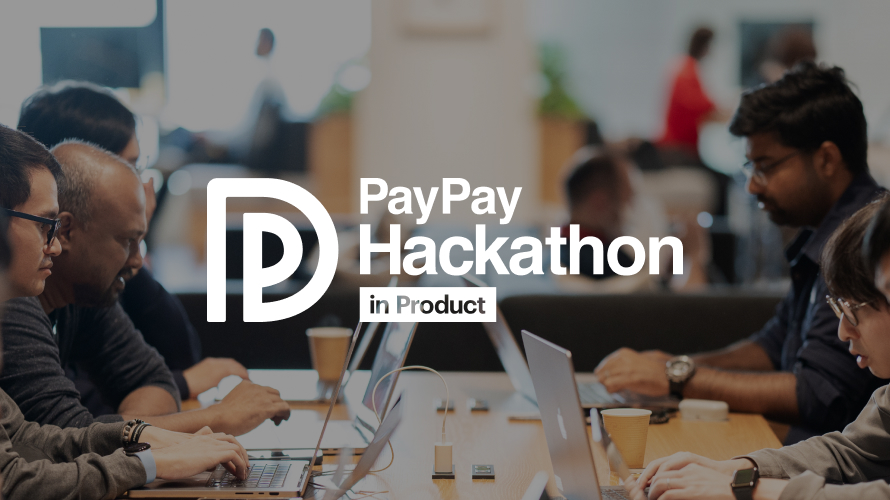
The sixth in-house hackathon was held from February 4th to 6th, 2026, under the theme “Things that Innovate PayPay Group.”
Product managers, designers, and engineers from across the group—including PayPay, PayPay Card, PayPay Securities, PayPay Bank, and PayPay India—participated, forming 18 teams with a total of 78 members. This marked the largest number of participants in the history of our internal hackathons, reflecting growing interest and engagement across the group. The event was run in a hybrid format, combining on-site and remote participation, and brought together engineers from Japan and India to build and iterate side by side.
Rather than focusing on ideas alone, the hackathon challenged participants to explore how AI and cross-company collaboration could translate into working prototypes. Let’s take a closer look at how our engineers approach building under real constraints.
About PayPay Hackathon
PayPay Hackathon is an internal event where product members form small teams and spend a short, intensive period building practical service prototypes. Participants are expected to move quickly from concept to implementation, making trade-offs and decisions similar to those faced in everyday product development.
The hackathon reflects our engineering culture: execution over theory, hands-on problem solving, and close collaboration across roles. The emphasis is not on polished presentations, but on whether an idea can be implemented, demonstrated, and explained clearly within a limited time frame.
This time, the hackathon was held under the following rules:
- Teams consisted of 2 to 5 members
- A working prototype had to be built within two days
- Each team delivered a presentation and live demo within 180 seconds
By setting the team size to 2–5 members, the event placed greater emphasis on collaboration, shared ownership, and building something that could not be achieved alone. Nonetheless, the most important aspect of the hackathon is to find joy in creating.
Beyond rankings or awards, the event exists to remind engineers why they build products—experimenting with new approaches, learning from one another, and shipping something tangible under shared constraints.
The winning teams and their comments are introduced on the Hackathon event page, providing deeper insight into the ideas, implementations, and thinking behind each project.


Over the three days, developers, designers, and product managers from across the group worked closely to explore how AI could be applied to real product challenges. Many teams were intentionally formed with a mix of Japan-based and global members, and it was common to see presentations delivered in both Japanese and English. Discussions, code reviews, and demos naturally switched between languages, reflecting how distributed teams collaborate in practice.
In an environment driven by speed, curiosity, and hands-on execution, ideas were quickly turned into running prototypes. Teams focused on what could realistically be built within the time limit, resulting in proof-of-concepts that may influence future products and internal platforms.
This year also marked a meaningful first for the PayPay Group. Award-winning teams came from multiple group companies, including two teams from PayPay Card, one from PayPay Securities, and one from PayPay itself. What stood out was not just who won, but how teams with different technical backgrounds and product contexts delivered solid, working implementations under the same constraints. This outcome highlighted how engineering-driven innovation can scale further when execution and ownership emerge across the group, rather than from a single organization.PayPay Hackathon is a festival for developers—a place to test ideas, write code, and learn from each other at high speed.
We look forward to seeing even more ideas, collaborations, and builders from within the group at the next hackathon.
*Information such as job openings and employee affiliations is accurate as of the time of the interview.
