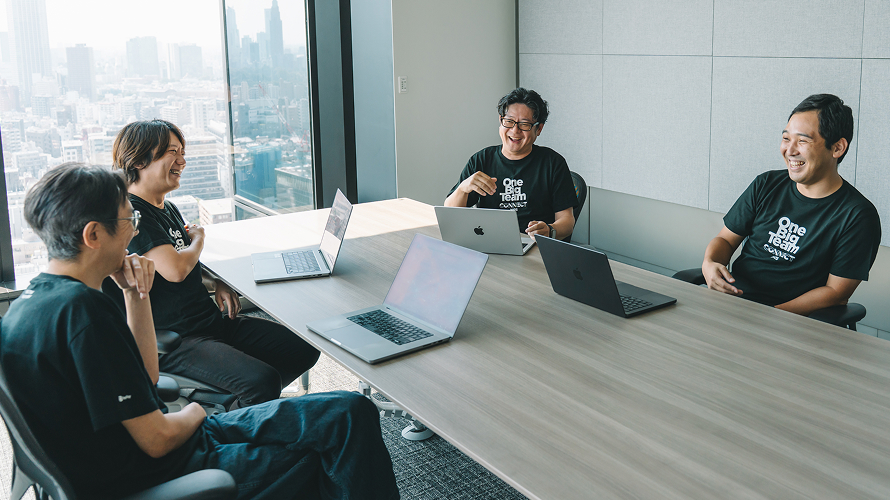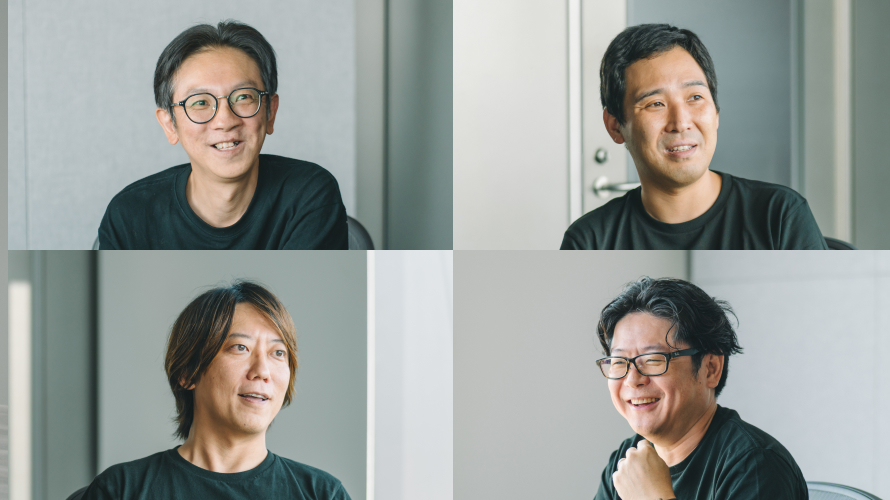
In this “Leader Interview” series, we feature the personalities and perspectives of our leadership across the PayPay Group. In this installment, we sit down with four product leaders from across the group as we strive to “redefine finance.” PayPay, PayPay Bank, PayPay Securities, and PayPay Card—each of these four entities possesses a distinct history, technical stack, and organizational structure. Yet, we are now collectively aiming for “One PayPay,” an experience so seamless that users need not distinguish between the individual companies that power their financial lives. However, achieving this vision cannot be accomplished simply by unifying the UI or creating navigational flows between services. We are tackling the complex challenge of unifying IDs, data, systems, SLAs, and development processes, all while navigating the differing priorities and organizational silos inherent in independent companies. How do we connect and modernize a massive, disparate ecosystem of financial services—each of which grew in isolation—to transform them into a unified experience? The conversation with these four leaders reveals not a completed project, but the reality of an ongoing engineering transformation at the heart of the PayPay Group.
Keisuke Yamamoto(aka KSK)
General Manager, Payment & Technology Platform Division, PayPay Corporation
Previously engaged in the development of large-scale payment services before joining PayPay Corporation in 2018. He has led the engineering organization since the company's inception and currently oversees platform infrastructure development.
Munenori Hirakawa(aka Mune)
General Manager, Payment & Technology Platform Division, PayPay Corporation
Joined PayPay Corporation in 2018 after working in payments and wallet service development. In 2022, he led the launch of PayPay’s operations in India as Managing Director, and currently oversees product development at PayPay Bank.

Yoshimitsu Sakui(aka Saku)
Executive Officer, CTO, and General Manager of Product Division, PayPay Securities Corporation
Joined PayPay Corporation in 2018 following experience in new service and application development. He is currently driving the technical and product modernization and organizational development at PayPay Securities.

Hiroyuki Shida
Director and Senior Executive Officer, CTO, PayPay Card Corporation
Joined PayPay Card Corporation on secondment after a career in payment service development. As Director and CTO, he currently oversees technical strategy and the development organization at PayPay Card.
Deepening Our Seamless Experience into”One Unified Experience”
KSK:
Our ultimate goal is a truly unified “One Product” experience from the user’s perspective. Until now, starting from the PayPay app, we have continuously connected the dots between our payment, banking, securities, and credit card services to create a seamless flow. However, users shouldn’t have to be conscious of the fact that we operate as separate corporate entities behind the scenes.
That’s why we want to forge these connected “dots” into even stronger, continuous “lines.” By refining touchpoints like onboarding and authentication, we aim to ensure that a single PayPay ID grants effortless, natural access across the entire group ecosystem.
Saku:
In the securities domain, there were areas where these differences in user experience were particularly noticeable. Because we originally had our own standalone native app and later introduced a mini-app within the main PayPay app, we faced challenges where certain information was not fully synchronized between the two, sometimes confusing our users.
In terms of functionality, we have already built a seamless system that allows users to make purchases directly using PayPay Bank or PayPay Money, without needing to transfer funds into their securities account. However, we sometimes receive inquiries even from users who have linked their PayPay Bank account and are eligible for direct purchases, asking, “How do I deposit funds into my securities account?” Even if the features are connected behind the scenes, it means little if the experience isn’t delivered intuitively to the user.
Along with creating an environment where users can seamlessly track their assets whether they use the native app or the mini-app, we want to go beyond simple feature integration and further elevate the UX through intuitive guidance and navigation so that users never feel lost.
Shida:
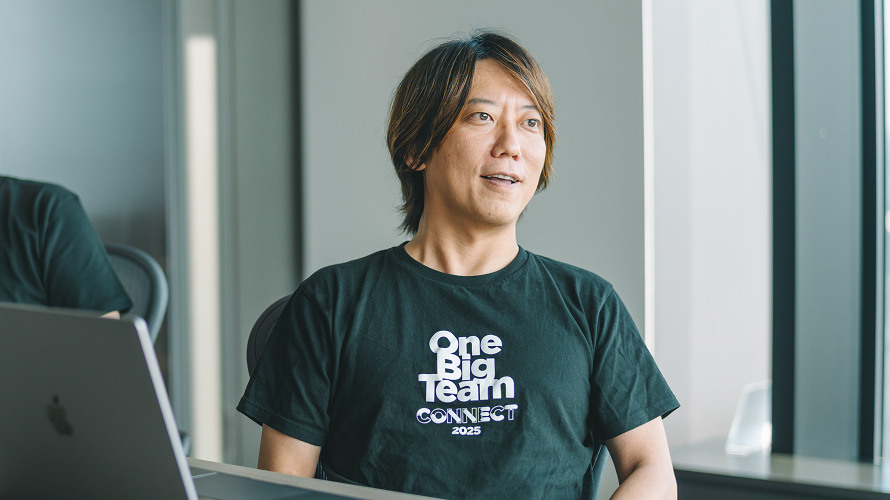
In our card business, cardholders has surpassed 18 million (as of July 2026), and our user base has diversified dramatically. Up until now, we have enhanced convenience focused on the card as an individual touchpoint. Moving forward, we are entering a phase where we deliver value as a unified “One Product” tailored to each user’s lifestyle. Rather than trying to tailor recommendations and information based solely on the data held by PayPay Card, I feel that true personalization—solving real user challenges—only becomes possible when data and financial touchpoints across the entire group, including banking, securities, and insurance, are brought together.
Mune:
By adopting PayPay’s intuitive UI, PayPay Bank has evolved into a more accessible service. While we have made progress in connecting the dots between our services, there is still room for improvement if we ask ourselves whether it appears as a completely single “One Product” from the user’s perspective. When systems get large, you start hearing internal constraints like, “It’s a batch process, so it will reflect tomorrow.” But users don’t care about our backend setup. Rather than using legacy constraints as excuses, using technology to eliminate every bit of friction and build a seamless “One Product” experience is the true essence of engineering.
Standardization is More Complex Than “Just Unifying Tech”
KSK:
Achieving a “One Experience” requires more than just UI alignment; we have to re-architect what’s under the hood. We are moving from a state where each entity optimized its own stack to one where we build a shared platform.
But it’s not as simple as “standardizing on one tech stack.” If we force everything into one technology, we lose the flexibility to integrate with others. Our step-by-step approach is to modernize the legacy portions of each entity, bring each company’s technology stack up to a modern baseline, identify the best components, and then migrate those to a common platform.
And standardization brings new challenges. When you manage a common platform, you have to satisfy the complex, overlapping requirements of every company in the group. The reliability and SLA requirements become significantly more demanding. But if we can achieve high-level SLAs at that scale, we can bring that level of quality across the entire group. That’s the level of Platform Engineering we’re aiming for.

Mune:This isn’t just a technical challenge. Different companies mean different cultures, histories, and development methodologies. You can’t just build a platform and say, “Starting today, use this.” We have to deeply understand each other’s domains and constraints—including strict financial audits and compliance—to find where we can truly align.
That’s why we hold “Group Product Meetings” every quarter. We need to build mutual trust and horizontal collaboration. If we don’t truly feel like we are “building as one team,” we’ll never deliver “one experience” to our users.
Short-term Revenue vs. Future Platforms: Setting Priorities
KSK:
Discussions come up in each company about wanting to further expand “cross-use,” where users seamlessly utilize services across the entire group. But when you get into the weeds, projects with immediate revenue impact usually take priority. ID integration and common platform development don’t generate immediate revenue. But if we’re serious about cross-use, we must build that foundation. We need a culture that prioritizes “what we need to create the future user experience” rather than just chasing quarterly KPIs.
Saku:
We see the same dilemma in securities. If the priority for ID integration is low, cross-use remains just a slogan. We need to shift from “What drives revenue for Securities right now?” to “What does the PayPay Group need?” Viewing investment in shared foundations like platforms and ID as a group-wide initiative is a crucial mindset shift.
Organizing Around Products, Not Org Charts
KSK:
Building “One PayPay” isn’t just about clean system architecture; it’s about changing our Operating Model. I don’t believe in creating a massive, centralized “super-organization” to oversee group initiatives.
People should stay in their respective teams—Card, Bank, Securities. If the goal and the product are the same, we form a single project team, across company boundaries. “This time, Card leads; next time, Bank leads.” This Operating Model, where teams form around products and challenges rather than organizational charts, is the most natural and resilient approach for the PayPay Group.
Shida:
That requires the business side to align, too. If we only look at individual company KPIs, we’ll always revert to local optimization. We need to shift our decision-making criteria to the group level: “What value does this bring to the user as a PayPay Group?”

A Good Product “Doesn’t Frustrate the User”
KSK:
My definition of a good product is simple: It doesn’t frustrate the user. It’s fast—fast rendering, fast payments. It’s stable, and the UI is intuitive. Many traditional financial services are still built on batch processing and overly complex user flows. But for the user, “it reflects tomorrow because it’s a bank” is irrelevant. I want to bring PayPay’s emphasis on real-time speed and high SLAs across the entire group.
Saku:
In securities, we aim for a product so natural you don’t even realize you’re “using” it. Investing shouldn’t be intimidating. I want to build an experience where users can try Point Management using points earned through PayPay payments, and naturally step up from there to actual investments and asset management without ever feeling like they’ve hit a barrier.
And our development culture has shifted completely. We’ve shifted to fully in-house development led by our own engineers. It’s not just “decide specs, write code.” It’s “You build it, you run it.” We own the entire lifecycle: build, deploy, monitor, and iterate. We need to maintain that craftsman-like focus on the tiniest UI details and copy, ensuring we are convinced by everything we ship.
Mune:
For banking, Speed and Quality should not be a trade-off(Reliability/Security/Trust). Speed is essential, but because we hold users’ money, security is non-negotiable. But protecting quality shouldn’t become an excuse for moving slowly. To achieve high levels of both, we must modernize our architecture, push automation further, and evolve how we build. That is what great engineering at a financial technology company looks like.
Decision-making as Engineering Culture
KSK:
I’ve never been a fan of large meetings. In my teams, I avoid meetings with five or more people. The more people you have, the more you hear “I’ll take this back and think about it.” If you lack info, sure, take it back. But if you have the right people in the room, decide now and move. We must avoid the bureaucracy that often comes with scale and maintain the agility and speed of decision-making of a startup.
Shida:
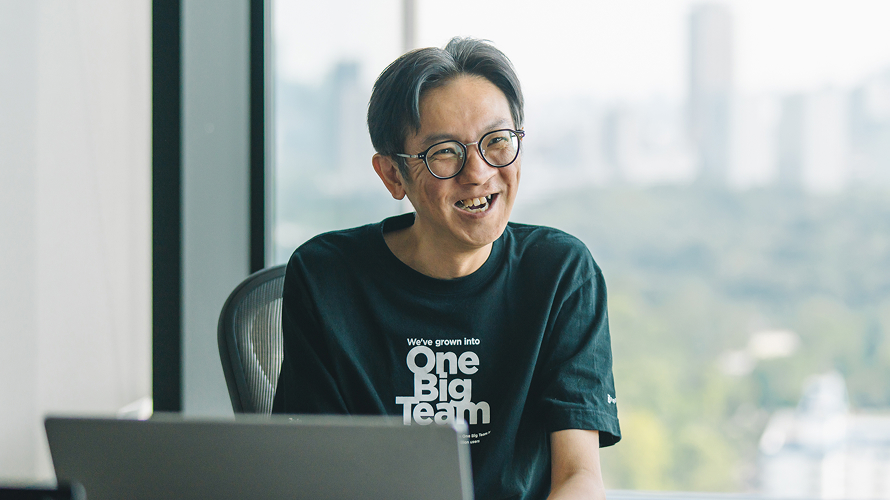
What shocked me most joining the PayPay Group was the “never satisfied” culture. Even when something is “good enough,” there’s a drive to iterate and improve. Technology, product, process—everything must evolve. My motto is: “The only thing that doesn’t change is that we keep changing.”
KSK:
Scaling brings the risk of complacency or corporate bureaucracy. When faced with difficult decisions or overwhelmed by daily tasks, there’s a risk that we might unconsciously prioritize internal convenience or our own pacing.
Of course, we encourage a healthy work-life balance and taking time off when needed; we aren’t advocating for overworking. However, our primary decision-making criteria must always be, “Is the user struggling right now?” and “What is the absolute best choice for the user?” As long as we uphold “User First,” we must always return to that principle—whether in product prioritization or daily operations. Maintaining that sense of ownership and user-centric mindset across the team as the organization expands is our biggest challenge moving forward.
Transforming the Product Experience through AI
Shida:
We are entering the next phase of AI. Currently, generative AI is used mostly for internal efficiency. Our next goal is “AI-based Products.” We’ve been using a broad-brush approach: “Target this segment with this campaign.” But even within the same age group, income, family structure, and life stage differ. True financial experience is personal.
The PayPay Group has a wide range of financial touchpoints across payments, savings, investing, cards, and loans. If we connect all of these through “One PayPay,” we can use AI to provide personalized value and advice automatically. We aren’t just making internal work efficient; we are fundamentally changing the financial product itself. That’s our next challenge.
KSK:
Some think a “Technology Company” means building your own AI or database engine from scratch. We see it differently. It’s not about making tech; it’s about starting from “What do we want to achieve?” and choosing the right tech to master. We don’t adopt tech because it’s trendy; we use it to solve problems. If legacy constraints block us, we use tech to break through them. That is the definition of a Technology Company.
The Journey to “One PayPay” Is Just Beginning
Mune:
Banking is in the middle of this transformation. We are shedding vendor dependency and making PayPay’s user-centric, in-house, high-speed standards our own. I want to build an organization where the bank-led best practice of “breaking through legacy walls with tech” becomes something we share across the group.
Saku:
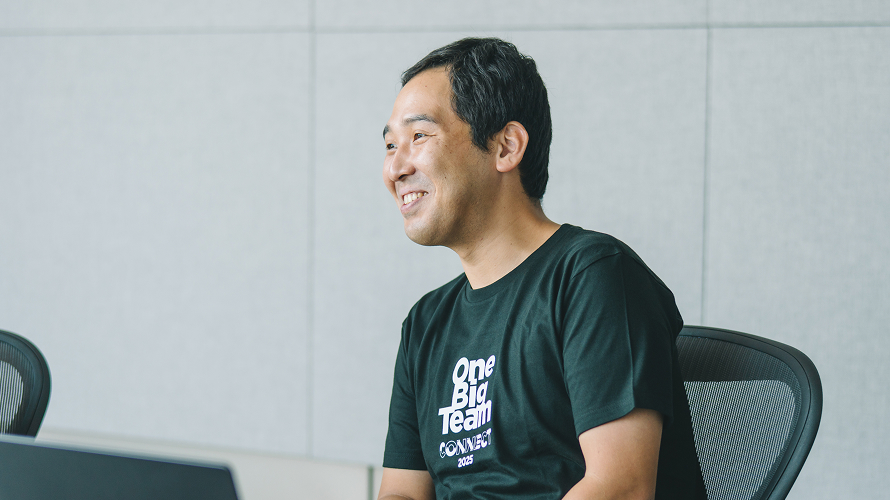
We’ve reached a milestone in in-house development. Now, we use that power to enhance quality. With a “You build it, you run it” mindset, we want to create products that users can rely on throughout their 10-, 20-, or 30-year journey of building wealth.
Shida:
Technology will continue to evolve. I want to grow our team with people who proactively think, “What new value can we deliver to the user with this new tech?” I want us to be an organization that thinks for itself and changes itself.
KSK:
We’ve already made progress in integrating services across the group. But to be honest, compared with our vision of “One PayPay,” we’re still only at the beginning. Our systems are different, our technology stacks are different, and each company has its own priorities to balance. That’s exactly why there is still so much for us to change with our own hands. We need to modernize our systems, build common platforms, and create teams that work across company boundaries. Only then can we reach a point where users can move naturally across their financial lives without ever having to think about which company sits behind each service. There’s still so much more we can do.
Even as the organization changes, the tech evolves, and our services grow, when we’re in doubt, we return to two questions: “Is this best for the user?” and “Can we do better with technology?” Moving beyond local optimization to build “One PayPay” with our own hands—that is the engineering challenge we will continue to tackle.