


About Tech Talks
In the Tech Talks series, we’re excited to bring you the unique culture and perspective of the PayPay Tech Team through conversations with our product members, representing diverse backgrounds from approximately 50 countries around the world.
In this issue, we spoke with two active members who are serving as Principal Software Engineers.
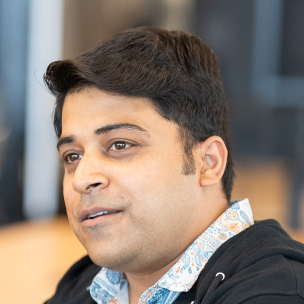
Harsh Prasad
Hi, I’m Harsh from Pay2 Development Center. I came to Japan in 2014 and was engaged in the development of search platforms and core search engines at Yahoo Japan Corporation (current LY Corporation). I was seconded to PayPay in July 2018 and made an official transfer in April 2020. In July 2023, I moved to India to provide technical supports at the Pay2 Development Center (“Pay2DC”), the development hub of PayPay. I’m truly excited about the fast-paced growth opportunities in our startup culture!
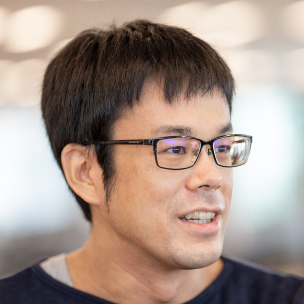
Seiya Yazaki
I’m Seiya from the User Module Team. I joined PayPay in July 2021 after gaining experience in frontend, backend, and core technology areas at various companies. What I find most appealing about PayPay is its challenging environment, where we handle immense traffic, drive numerous feature developments, and meet high security expectations. I provide technical support for PayPay Securities.
Please tell us the roles and current responsibilities of a Principal Software Engineer
Harsh:
The primary role of the Principal Software Engineers is to provide practical guidance and drive the team from a technical perspective based on a deep understanding of how software and platforms work.
I’m currently providing technical support for Pay2DC in India, sharing my knowledge with the team members, and working on various projects alongside the team members. Pay2DC has been up and running for almost a year now, and the team is steadily growing. With most of the members being locally hired engineers, my mission is to help development and delivery of new products and features, while ensuring the quality and speed expected by PayPay.
Seiya:
I work in the User Module Team, leading the technical aspects of the system related to user functions such as login and user registration for PayPay. The User Module directly impacts over 60 million users and interacts with a vast number of systems and functions. So we must ensure the security, availability, usability, and the overall design validity and consistency of the application platform, when viewed as a whole product.
The role of a Principal Software Engineer often involves breaking down the business requirements and specifications, which exert a significant impact on nearly every feature and service’s foundation. This necessitates the task of clarifying the specific roles of each team’s components and crafting a comprehensive grand design.
Furthermore, Principal Software Engineers play a pivotal role in identifying common issues shared between different teams and members, aiming for comprehensive and optimal solutions. Rather than solving individual challenges, we lead them to uncover shared solutions and implement preventive measures.
Which project made the biggest impression on you?
Seiya:
It was a project for completely replacing the overall system design and implementation related to authentication. We had a variety of stakeholders, each presenting different challenges and expectations for the existing system. Consequently, we began by defining and organizing these challenges. The outcome was an improvement in all aspects encompassing security, scalability, reliability, and usability.
Harsh:
As for me, I have directed my efforts toward improving the scalability of payment-related systems for the past two years. Our services experienced rapid growth, but the scalability of our systems lagged behind due to a sharp increase in the number of payments. We addressed the issues pertaining to infrastructure and applications that had accumulated as new features were released one after another, along with the expansion of use cases. As a result, we are now able to process several thousand payments per second. I’m certain that the scalability will suffice over the next several years.
What influenced your decision to join PayPay after gaining experience?
Seiya:
One of the most attractive aspects of PayPay is that we can tackle three challenging elements—speedy development, handling huge traffic, and managing complex features—simultaneously. While there are many services that focus on one of these three aspects, there are surprisingly few that require all three to be addressed concurrently. I find this environment exciting.
Harsh:
I have experience in the field of mobile payment, and I believe PayPay is exceptional due to its innovative approach to reshaping society. Joining PayPay as a secondee, I was amazed by the fast-paced startup culture and development speed. As both the services and I continue to grow rapidly, I developed a sense of responsibility in making PayPay the No. 1 payment service. Additionally, the ongoing evolution and the unknown possibilities keep me excited about what the future holds.
What makes PayPay’s Principal Software Engineers unique and what makes the role interesting?
Seiya:
The role of a Principal Software Engineer extends far beyond resolving issues within a user module system. It entails a continuous pursuit of optimal solutions for the entire product, requiring a long-term perspective. At PayPay, the presence of the three elements I mentioned earlier—rapid development, massive traffic, and complexity of features—sets the stage for more challenging tasks, which I find to be a remarkable feature of PayPay.
For instance, if there is an incident that occurs only once in several hundred million API calls, it often goes unnoticed and is not a concern for most services. However, with PayPay, this could mean that such incidents may arise as frequently as every few days. Facing challenges of such extreme nature at that level is truly fascinating.
Another captivating aspect is the environment at PayPay, which empowers individuals to take a broad range of actions toward their goals. In some companies, roles are so rigidly defined that you can’t interfere with matters outside your responsibilities, but at PayPay, it is rare that you are unable to do something due to exceeding the scope of your duty. I find it rewarding to think of how I can meet the service and business expectations and putting my own ideas into action.
Harsh:
And the speed is amazing! While most companies would take a year or two to develop a new service, PayPay breaks down the development process and works on what can be accomplished within just a few months. Rather than delivering all functionalities at once, we introduce a limited set of features and move on to the next, based on user feedback. PayPay undergoes numerous transformations well before other companies take their initial steps, resulting in significant differences in the system configuration.
In addition to the speed, there is the significant challenge of advancing projects while predicting the specifications that will remain relevant in three years’ time. I’m certain that such an experience is one of the interesting facets of being a Principal Software Engineer at PayPay.

What challenges do you want to take on in the future?
Harsh:
I aspire to be a role model who can contribute to the growth of young engineers. At PayPay, you have the chance to work with large-scale systems you’ve never worked with before and enjoy numerous opportunities to grow. I hope many people will find this work experience enjoyable.

Seiya:
I currently provide technical support for PayPay Securities, so I aspire to diversify the range of technical challenges across the entire group by engaging in different challenges than those at PayPay. And I would be delighted to contribute to the accumulation of knowledge and expertise.
Lastly, a message for our readers please!
Seiya:
PayPay is a great service that has brought a positive impact on many users. A deep understanding of computer science and technology is, of course, important for the Principal Software Engineers, but I value working with individuals who are enthusiastic about delivering good services for users as well as increasing their skills and knowledge.
Harsh:
Communication skills and leadership are crucial at PayPay due to our rapid evolution. You will be able to play an active role if you can find issues yourself and work through them, not waiting until someone tells you what to do. We’d love to welcome individuals who are genuinely motivated to make improvements and are open to embracing challenging tasks.

Current job openings
*Job openings and employee affiliations are current as of the time of the interview.