


We designers held our first designer’s offline event!
Greetings from the PayPay Product Design Team.
We held a Recruiting Event for the PayPay Design Team on November 30, 2023. We would like to thank everyone who attended in spite of the cold weather! In this article, we will recap the event for those of you who were not able to attend. The event showcased our team’s diversity and the expertise of its members to capture the interest of talented designers.
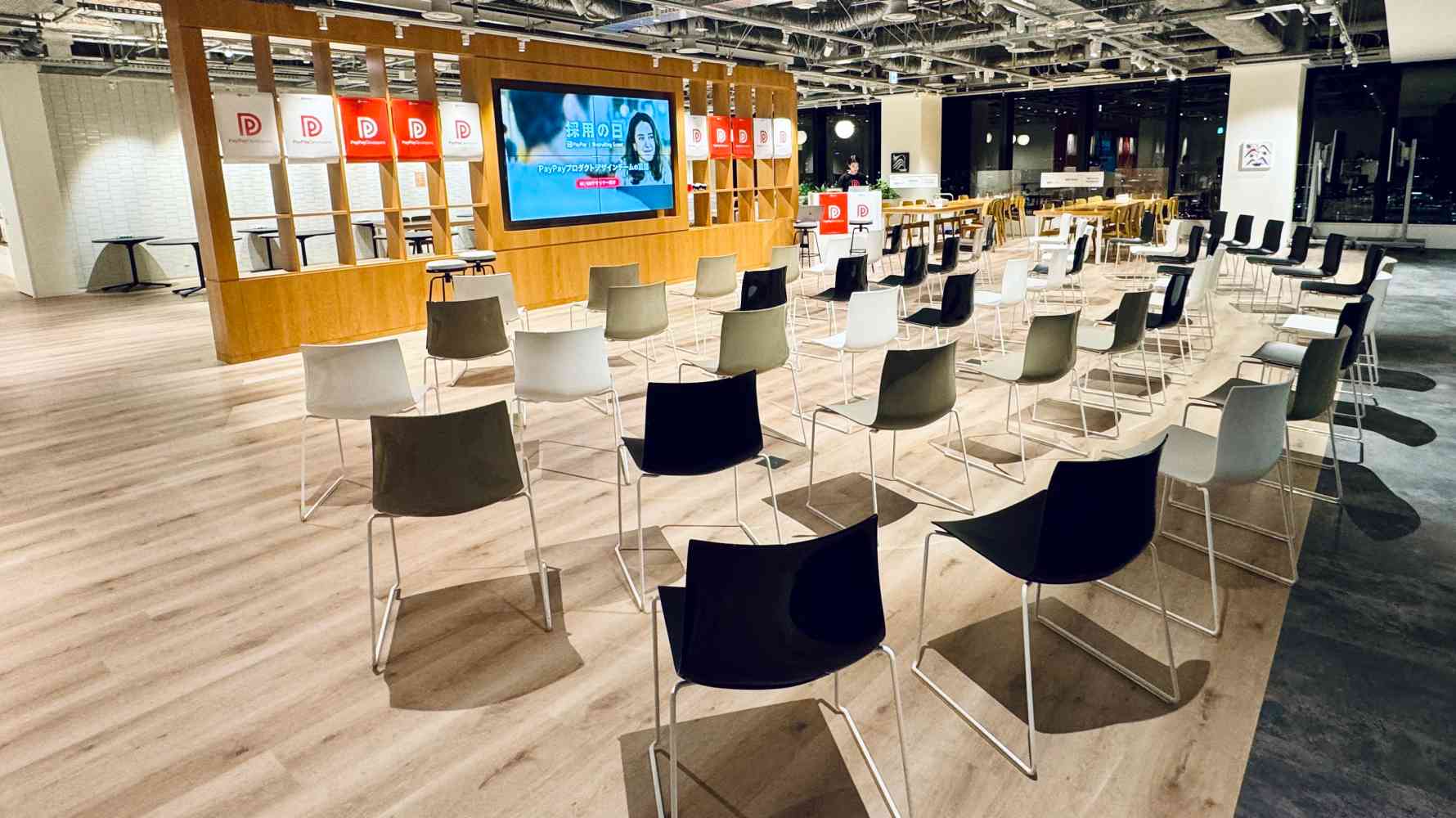
Agenda
PayPay Design Team Introduction
Our mission is to update all touchpoints with users related to money and finance. Payments and financial touchpoints play an important role in a user’s life, from daily life, to major purchases such as a house or car, to building assets after retirement. We always want to stay close to our users and keep all touchpoints updated with the power of PayPay to solve the uncertainties about the future and inconveniences they may feel.
PayPay’s Design Team also communicates closely with the designers of our group companies. In particular, we often have joint discussions with the PayPay Card and PayPay Securities teams. Currently, PayPay’s design team members support design on the Securities side, which is also boosting its designer hiring.
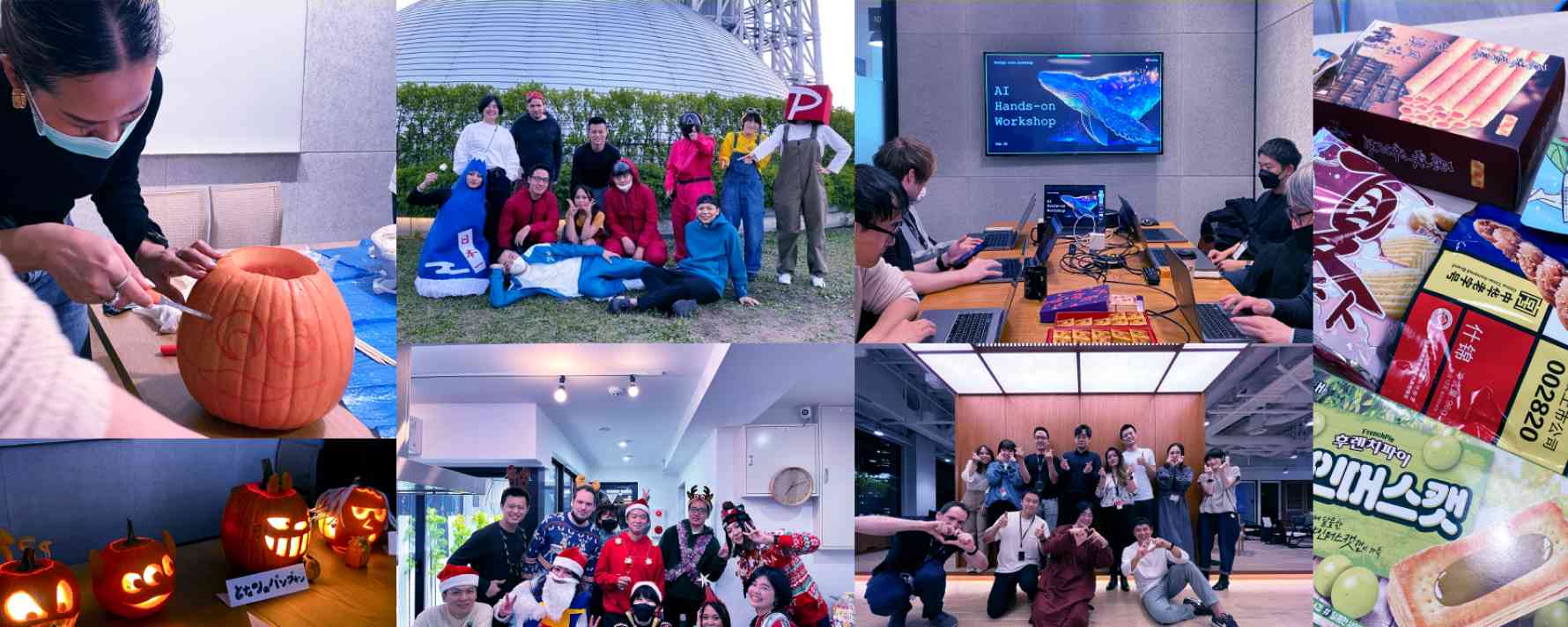
Our team’s atmosphere is very casual and everyone gets along well. We do work remotely, but meet in the office once a month for team building, where we have workshops or parties. Also, since everyone is from different countries, we sometimes get to enjoy an international snack lineup during office meetings! We hope this helps you all find PayPay an attractive environment!
UX Research at PayPay
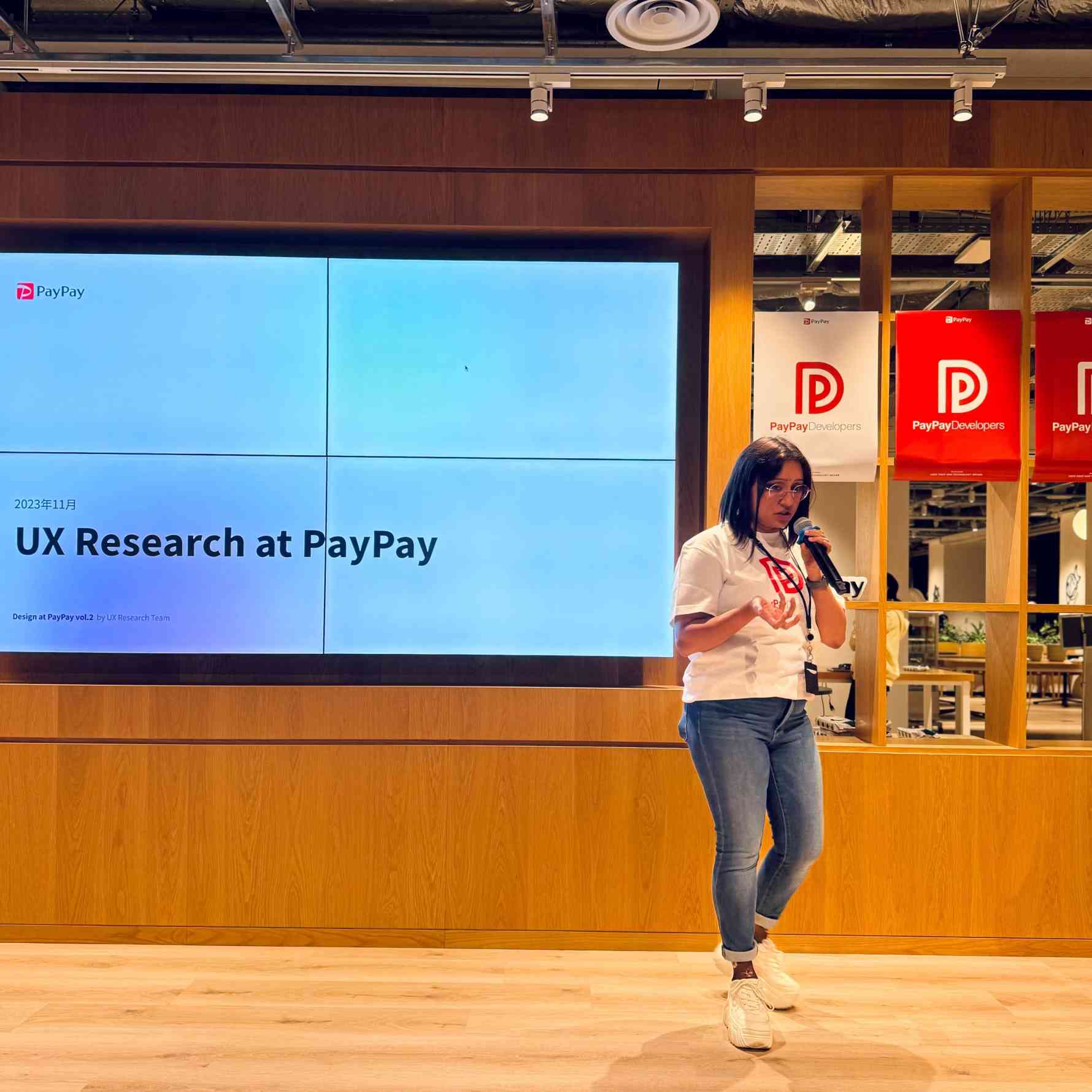
In this section, the UX Bestie Team shared a case study on how they understood PayPay’s user needs and incorporated them into their product design
The Importance of Research to the PayPay Design Team

The PayPay Design Team is made up of members with diverse backgrounds. This very much influences our observations of our users’ behavior, so the UX Bestie Team uses both qualitative and quantitative data to reduce this bias in the design process and help create valuable products.
Please check Design at PayPay : UX Research at PayPay for a detailed case study!
Panel Discussion

Attendees of this event asked us whatever they were curious about in the signup form, and those questions were answered in our panel discussion. We picked ten questions from the pool by generalizing common themes, ranging from PayPay’s design process and communication style, to how we face challenges/opportunities like AI as product designers, and to the ideal profile we look for in the PayPay Design Team.
Q: What are the top 3 things PayPay’s Design Team values most?
We value a user-centered mindset, strong communication skills, and a spirit of challenge. We always put our users first and never ignore a scenario or edge case, because we have 62 million users (as of February 2024) and an impact on even 1% of them would mean more than half a million people. Second, we are quick collaborators with various stakeholders, we set our ego aside, and we lend a sincere and open ear to all suggestions, so the ability to communicate our ideas in a clear and easy to understand way is crucial. Finally, the spirit of always learning and trying new things helps us stay humble and keep growing.
Q: How does the PayPay Design Team manage the design process when working with multiple stakeholders?
We work closely with project managers, other designers, and engineers to make sure we’re on the same page and solving the right problems. Sometimes we challenge the existing proposal if we don’t think it takes the user’s needs into account. We come up with flows early and discuss them with the engineers to see if our solution is feasible, then draw up the details and present them to the Design Team, who gives feedback on any edge cases we may have missed. This is a virtuous cycle of constantly presenting and improving your design, which gives you confidence that your solution is likely to work.
Q: How does the PayPay Design Team keep the design system up to date with new feature developments and industry trends?
We stay up to speed with the latest Figma updates every year. We go to conferences, network with other people, and bring our learnings back to the Design Team. We also have members who like to try out new tools, so if we think a new tool will be helpful, we’ll share knowledge on it with other team members and see how we can integrate it into our workflow. We also have internal Slack channels where anyone can post at any time for design-related news.
Q: How does the PayPay Design Team validate design solutions? Please share some insights on how you conduct user interviews and usability testing.
To validate design solutions, as much as time allows, we conduct interviews and usability tests in the field to test our hypotheses. Sometimes our hypothesis is proven wrong, allowing us to improve our product accordingly. Project managers also help us by running A/B tests if there is something we can’t be certain about. For uncertainties that don’t require a lot of stakeholder involvement, our team has a bi-weekly review where we always present our initial idea to team members and get peer reviews. Also, after the launch of a feature, we keep a close eye on how it performs. We also make use of the expertise of PayPay’s customer service team to learn the details of our users’ pain points.
Q: What are the pain points that the PayPay Design Team is trying to solve?
We are building an ecosystem for our users to help them make better financial decisions over the course of their lives. We want to forge strong trust between PayPay and our users to be able to help them whenever they need it.
Q: Do you think AI technologies will help you build a better product, or challenge you by limiting your creativity?
We definitely believe that AI can help us build better products. We encourage each other to use the power of AI to save time on mundane work, thereby making more time to focus on what’s meaningful. That said, for AI to help improve products, we need to learn what to ask and how to ask it ― to come up with effective prompts that are actually helpful. We don’t see AI as intimidating or limiting, but as an assistant to help us come up with a solution faster than is possible today.
Q&A
Then came the fun part, where participants asked random questions that were not answered above. Questions ranged from cultural differences between Japanese and Western markets, to how we deal with design and communication in a multicultural and bilingual company, and even to how we help designers grow in our team.
With members of diverse nationalities, the Design Team has always found and built on ways to foster a friendly and open multicultural environment, which in turn is reflected in our product design thinking. We believe that when you feel you belong, you naturally build better things because you care.

Q: How do you balance the Western and Japanese influences? Do you favor the Japanese side?
Instead of thinking about what’s Western and what’s Japanese, we think about true design success ― in other words, how something is ultimately perceived. For example, culturally, Japanese people like to have more information up front. That’s one reason why a lot of these designs are more dense than in the West, where everything is a little more visual. So sometimes, maybe we need to describe the design using text instead of just having an icon; and if that’s based on metrics, we can call it a design success. So it’s not necessarily “Western versus Japanese,” it’s more based on how we measure a design’s success.
Q: How do you deal with accessibility in PayPay? How much attention do you pay to it? Where in your process is it incorporated, and what do you check for?
We’ve been paying a lot of attention to accessibility since day one, but there’s still a lot of room to grow, so we’re currently building a dedicated accessibility team to make sure it’s always thoroughly considered at PayPay.
Q: What is a typical day for the Design Team?
An:
For me, mornings are my focus time, and afternoons are more for meetings. We’re pretty flexible.
Polly:
I start at 10 a.m. We have a design review meeting every two weeks, product line meetings, and our own review meeting. So we usually just start with a general design meeting. We do a couple of design reviews, and we look at what the other designers are working on. We go to lunch, of course. At the end of the day we just wrap things up. Sometimes we take care of things on our private channels, whatever we need to work on that week.
Michael:
I have multiple projects going on at the same time, so 50% is productive time, 50% is in meetings. If you’re not careful and you don’t schedule focus time, some people might fill up your calendar. Some of our designers like to work from 7 a.m. on; I admire them! I like to sleep a little longer, so I start at 9 or 10 a.m. We have the flexibility to work from home anywhere in Japan. Our Design Team is actually spread all over the country. I myself like to use one of our satellite offices, too; that’s one of the benefits we have. I visit offices all throughout Tokyo. I also like to socialize, so I like to come to the office once in a while to meet up with other people.
Networking


This was our first time doing an offline event like this, where attendees can chat with PayPay designers and get some insights. Even if talking is not your thing, the event probably gave you some sense of how friendly, laid-back, and open the Design Team is just by being there and observing. If you were hesitant to join us this time, please follow our LinkedIn page for information on upcoming events!
One Last Word
That’s all for our first event report! Thank you for taking your time to read it. If you are interested in learning more about us, please check out our articles or attend one of our events, as we plan to hold more on various topics in the future! We look forward to seeing you at our next offline event!
Message for Our Readers
Our Design Team is a family that supports one another to build a product that we ourselves and the people we care about use on a daily basis. We pour our hearts into our product.
In our panel discussion, our panelists shared the three things our team values the most: putting our users first, setting our egos aside, and always being excited to try new things. If you think these describe you, we’re sure you would enjoy your time on our team! Get on board, and let’s grow together!
Current Job Openings
*Job openings and employee affiliations are current as of the time of the interview.