




About Tech Talks
In the Tech Talks series, we’re excited to bring you the unique culture and perspective of the PayPay Product Team with members representing diverse backgrounds from approximately 50 countries around the world.
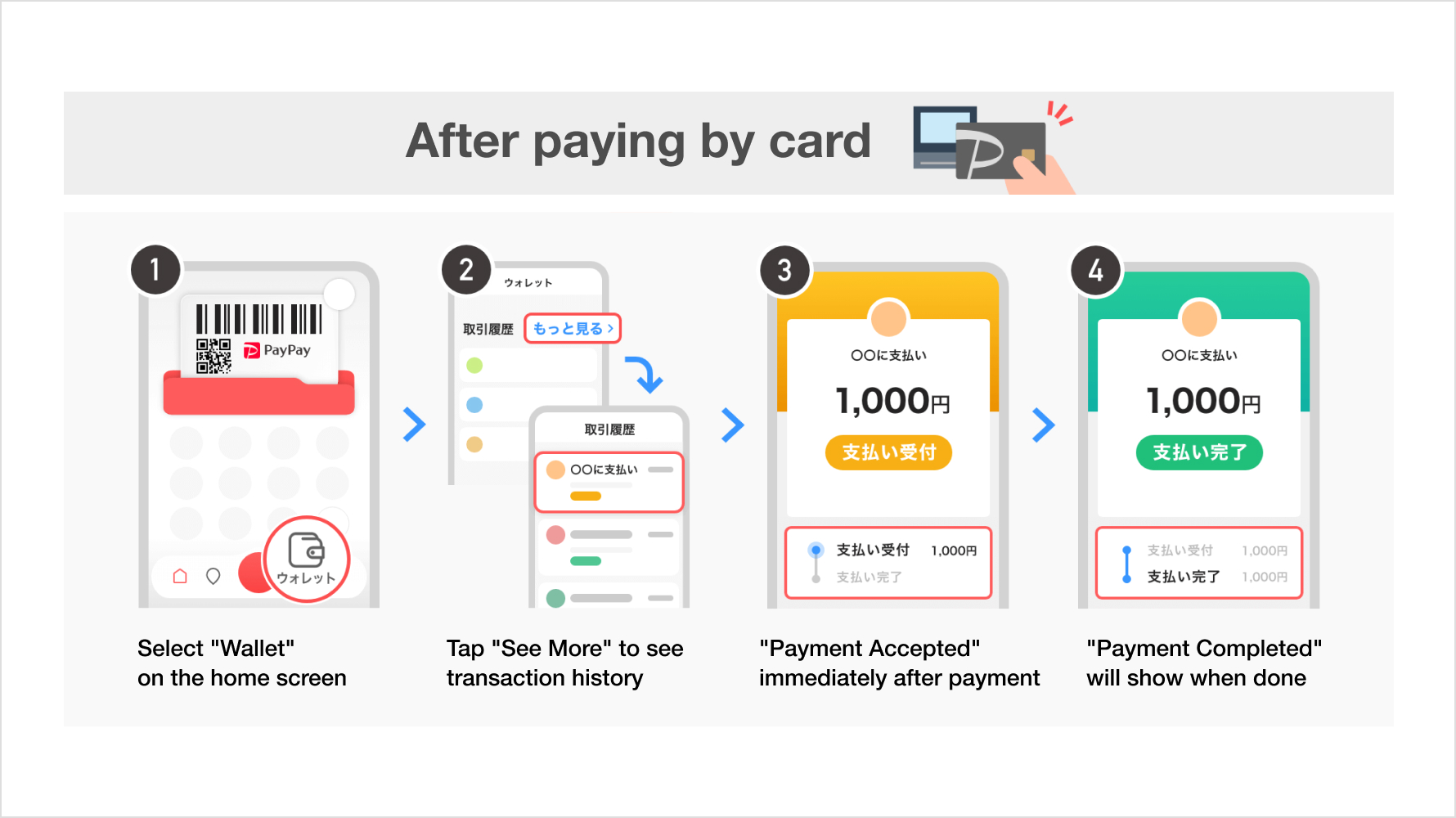
In this issue, we interviewed engineers from PayPay and PayPay Card about the development journey (a feature that allows real-time confirmation of PayPay Card payment information from “payment information” in the PayPay app *available only in japanese), discussing the challenges and lessons learned during development.

Artem Bulanov(Artem)
Backend Engineer
I am Artem from Russia. After working as a software engineer at a subsidiary of a major Japanese electronics manufacturer and being involved in financial projects at a software company, I came to Japan in September 2022 when I joined PayPay.

Weina Li(Ina)
Project Manager
I am Ina from China. In my previous job at a major internet-related company, I was responsible for compliance with laws and regulations related to online payments. Seeking further growth in a more challenging role, I joined PayPay in April 2023 and now work as a PMO for finance projects in the product team.

Hiroya Sato
Engineering Manager
In my previous job, I was involved in a project to newly launch an international payment method using blockchain. Wanting to participate in system development that provides value to many people, I joined PayPay Card as an EM in April 2023 and have been involved in various projects since.

Shunya Sakai
Product Manager
After gaining experience at a major credit card company, I joined PayPay Card in February 2023. I am striving every day to provide features and services to users at the right time.

Shusuke Funatsu
Product Manager
Attracted by the open corporate culture and the opportunity to work in Fukuoka, I joined PayPay Card (formerly YJ Card Corporation) as a new graduate in 2018. After gaining experience in maintenance and operations, I am now engaged in development and PdM roles.
Overview and Mission of This Project
Ina:
The problem that led to the formulation of this project was that it was taking time for a PayPay Card transaction to reflect in the transaction history of the “Wallet” section of the PayPay app. Many users were contacting our customer support with queries like, “I want to check my transactions immediately” or “I paid yesterday, but I received the notification today. Why?”
We felt that this could not be left as it is, especially from a convenience perspective. And that’s how the decision was made for developers from PayPay and PayPay Card to team-up to fundamentally revamp the system and enable real-time confirmation of payment information from the PayPay app, including information about the points and rewards to be granted.
Our goal through this project was to provide a valuable payment experience similar to barcode payments and strengthen the market competitiveness of PayPay Card.

Artem:
In the transaction history screen, users can confirm information about payments they’ve made including the PayPay points to be granted and logo of the store. Additionally, payments made with PayPay Card are counted towards the PayPay STEP program on the day of the payment, just like payments made with the PayPay app. One of the major missions of this project was to create a system that displays store names and logos with a higher degree of accuracy.
Roles Assigned in the Project
Ina:
As the PjM, my role was overall project management and coordination. Since the developers from PayPay and PayPay Card needed to work as one team for this project, I also worked to ensure smooth collaboration by understanding the different corporate cultures.
Artem:
As a BE, I worked on developing new services for the credit terminal master and data migration from PayPay Card to PayPay. Since I’m a developer at PayPay, understanding PayPay Card’s internal systems and what both companies aimed to achieve was challenging at the outset of the project.

Sakai:
As a PdM, I was responsible for directing the development on the PayPay Card side, mainly sorting out the requirements of each task. It was challenging to coordinate because the development environments and work practices were fundamentally different between PayPay and PayPay Card.
Sato:
I developed a system to connect the vast amount of transaction data generated by PayPay Card to PayPay. Since I was still new to working at PayPay Card, I had to allocate time to understand the business while ensuring smooth migration and modification of the large system connecting PayPay and PayPay Card.
Funatsu:
In this project, I was involved in developing the data matching system. It was a continuous series of painstaking tasks.
Challenges Faced During Development
Artem:
The credit card payment process involves the merchant requesting authorization (“auth”) from the card company when a user makes a purchase, and the card company capturing the transaction (“capture”) in response.

While saying “auth followed by capture” sounds simple, in reality, there are various cases like changes in the authorized amount, missing auths, or refunds. We needed to process data considering all possible cases.
Additionally, many exceptions and unexpected characters like commas were included in the data, so we manually identified and processed unnecessary data from over a million merchant data entries. We repeated the process of removing unnecessary data on the PayPay Card side and reviewing it on the PayPay side several times. Making PayPay Card data display correctly on PayPay sounds simple, but due to the nature of credit card transactions, it required significant dedication to get all possible cases properly handled. Eventually, we understood the content and were able to import it for use in user transactions, but it was a process that involved many hardships along the way, even though the development itself was quite standard.
Funatsu:
For me, linking authorization and sales data with high accuracy was a very challenging task. Although the data items provided from credit merchants to PayPay Card are fixed, some merchants do not populate the items, while others set completely different values. It was particularly challenging to verify which items would yield accurate values.
It was a painstaking process, but we analyzed each item while looking at the actual data, asking questions such as, “Is this item accurate?” or “Does it increase the number of matched items?” I had no experience with authorization or sales data before this project, so I was honestly anxious about how I could perform data analysis and improve matching accuracy. Within the one-month period given for accuracy improvement, I thought about what could be done, created a new team for data analysis, and conducted thorough analysis, eventually achieving high accuracy that could be provided externally.

Sato:
The various patterns of authorization mentioned by Artem-san and the data items discussed by Funatsu-san were indeed complex and intertwined in this development project. Moreover, high quality was demanded for the tasks each developer faced. We meticulously verified each pattern, asking, “What about this case?” and as a result of collaboration across company boundaries, we were able to offer a unique PayPay group payment experience where points are awarded the moment authorization is received. The hurdles during development were very high, and the joy upon release was immense.
Secrets to Successful Collaboration Between the Two Companies
Ina:
Since PayPay and PayPay Card are different companies in the same group, it is natural that their decision-making processes, development environments, and communication styles differ. To blend the different corporate cultures, we held general project meetings to align perceptions and regularly organized workshops for both teams to understand each other’s culture and expectations. We also set clear communication rules in advance and conducted regular progress checks and feedback sessions. Initially, there were hurdles due to cultural differences, but gradually, mutual understanding and cooperation strengthened.
We also created a list of responsible persons for each module, making it easy to identify who was responsible for related modules. This facilitated collaboration among engineers during development and testing.
Additionally, we scheduled office days for testing in the production environment. Although we mainly work remotely, meeting face-to-face and having meals together helped build stronger trust relationships.
Sakai:
PayPay uses English and Japanese, while PayPay Card uses Japanese as their official language, making it initially time-consuming to understand each other’s perspectives on product creation in different languages. However, through repeated communication, we aligned our perspectives and worked on this project in the same direction, allowing all members to cooperate beyond company boundaries and fulfill their respective missions.
Collaborative projects like this are likely to occur frequently in the future. Having understood each other’s environments and perspectives through this project, I’m ready to facilitate future projects much more seamlessly.
Lessons Learned Through This Project
Artem:
I had not had any experience in the credit card domain, about which I was able to learn a lot of things. I also realized that there truly are a wide range of cases to account for in credit card data processing. While 99% of cases may go as expected, there are always the 1% exceptions. As an engineer, I felt it was crucial to identify how to handle those exceptions.
Sato:
It was my first experience dealing with a system that handles such a large volume of transactions and acting as the lead of a component in a project involving many stakeholders. Constantly keeping in mind the goal of providing valuable products to users in a high-quality state, I maintained focus on the overall system, not just my component. I believe this will be beneficial if/when considerations are made for even larger systems going forward.
Additionally, the feedback I received from members from the PayPay team were from perspectives new to me, and was very stimulating.

Sakai:
There were many opportunities to deeply consider how to do our best within the limited time until the release. By proactively engaging with related issues beyond my role and tasks, I was able to commit to the schedule and create a good product.
Funatsu:
Since joining, I had been in charge of maintenance and operations, and this was my first experience in development. I learned a lot about the relationship between products and systems and the required communication. I intend to utilize this experience as a PdM in the future.
Future Prospects After This Release
Ina:
PayPay aims to become an indispensable social infrastructure as a comprehensive fintech app, not just a payment app. As a first step, through this project, we have built a foundation for expanding PayPay Card users by establishing a relationship between PayPay and PayPay Card. We will continue to enhance convenient, safe, and beneficial features, so please look forward to it!
A Message to the Readers
Funatsu:
At PayPay Card, the distance between the department planning services and the department developing systems is close, and we develop while discussing together. The developed products are used by many users, and you can directly feel the feedback, which is very rewarding. If you can think from the user’s perspective and enjoy new things and challenges, it will be an exciting environment. I would love to work with people who share the same feelings.
Sato:
If you can focus on providing valuable products to users and find it rewarding and attractive; if you want to create better things without being constrained by preconceptions, let’s work together to create products that can impress people!
Ina:
Both PayPay and PayPay Card are constantly challenging themselves to provide innovative services. If you want to take on the challenge of new technologies and projects, please apply. Let’s create the future cashless society together.

Current job openings
*Job openings and employee affiliations are current as of the time of the interview.