


Professionals is a series that shines a spotlight on exceptional talent across the PayPay Group. In this edition, we feature Yuki Kawano, Manager, Crypto, Financial Services Product Division, Product Group. From P2P payments and PayPay Card to his current role in the Crypto domain, he has expanded his expertise across multiple financial domains throughout his career. How did he discover the field he truly wanted to pursue, and how has he navigated uncertainty while taking on new challenges? Through the story behind the PayPay × Binance Japan collaboration, we explore the mindset, growth, and challenges of a product manager who continues to push beyond conventional boundaries.
Yuki Kawano
Manager, Crypto, Financial Services Product Division, Product Group
After working as a Data Analyst at a startup and gaining software development experience as an Engineer at a major HR technology company, he joined PayPay in 2020. As a Product Manager, he led initiatives focused on the growth of P2P payments and the improvement of user experiences. In November 2023, he was seconded to PayPay Card, where he drove projects involving generative AI and other strategic initiatives. He has been serving in his current role since September 2025.
Discovering the Domain I Wanted to Pursue
I joined PayPay in 2020 and started my career working on the P2P payments domain, focusing on improving user experiences. After a secondment to PayPay Card and gaining experience through projects involving generative AI, I now lead initiatives in the Crypto domain within PayPay’s Financial Services Product Division.
As I worked across different financial domains within the PayPay Group, I began asking myself a simple question: “Which area am I genuinely passionate about?” The PayPay Group spans a wide range of financial businesses, including payments, cards, securities, and banking. While they are all part of the financial industry, each domain requires a very different set of knowledge, perspectives, and expertise. I became especially aware of this during my time at PayPay Card. Working alongside professionals who had spent 15 or 20 years in the card industry made me reflect on how deeply I truly understood the domain I was working in. When I took a step back and thought about the field I wanted to pursue over the long term, the answer was Crypto. It was already an area I had a strong interest in. I didn’t have to consciously search for information—it naturally found its way to me. I was fascinated by the pace of technological innovation, and I gradually realized that this was the field where I wanted to challenge myself.
Around the same time, PayPay was beginning to expand its efforts in the Crypto space. I volunteered to join the initiative and moved into my current role. One of the things I value most about the PayPay Group is the opportunity to explore different financial domains within a single organization. Being able to discover the area I truly wanted to pursue has been one of the most significant experiences in my career.

From Speed to User Experience: How PayPay Changed and How I Changed
When I first joined PayPay in 2020, the company was in a rapid growth phase, and speed was one of the key drivers behind our growth. We moved fast, launched quickly, and learned through continuous iteration. Looking back, that mindset helped PayPay scale rapidly, and it pushed me to grow as well. Looking back, I believe that mindset was one of the reasons PayPay was able to grow at such a remarkable pace, and it pushed me to grow as well. As the company evolved, however, my perspective as a product manager gradually changed. In the past, when making a UI change, I would primarily think about how much a KPI might improve. Today, I think differently. I first consider how a change will impact the user experience, and then how that change in experience might influence the business.
I also feel that PayPay itself has entered a new phase. While speed remains important, there is now a stronger emphasis on delivering genuine value to users and improving product quality. That mindset carries over into my work in the Crypto domain. It is not enough to simply introduce new technologies. What matters is how those technologies can be translated into experiences that users can confidently and comfortably use. The Crypto space is technically complex. But from a user’s perspective, what matters most is whether the experience feels intuitive and trustworthy. Thinking about how to turn complexity into a seamless experience has become an increasingly important part of my role.
Beyond Building Products: My Role in the Crypto Domain
The Crypto domain is about far more than simply buying and selling digital assets. While many people still associate Crypto primarily with Bitcoin, the industry is rapidly evolving, with new technologies and financial services emerging all the time. That is why my role extends beyond building products—I also spend a great deal of time thinking about where the industry is heading and how those developments could create new experiences for users. One of the key initiatives I am currently involved in is our collaboration with Binance Japan. My work is not limited to defining product specifications. I collaborate closely with business teams, engage with external partners, and help shape what the ideal user experience should look like in an evolving and highly dynamic industry.
*Related Link: PayPay and Binance Japan Launch PayPay Money Integration Service (Announcement, November 21, 2025)
The Binance Japan collaboration is particularly unique because it involves working with an external organization rather than developing everything internally. As a result, it is critical to communicate not only what we want to build, but also why we want to build it. I often find myself explaining how a particular product decision affects the user experience and why those details matter. In many ways, my role today goes beyond simply building products. I see it as creating and validating experiences that work for users while aligning multiple stakeholders around a shared vision.
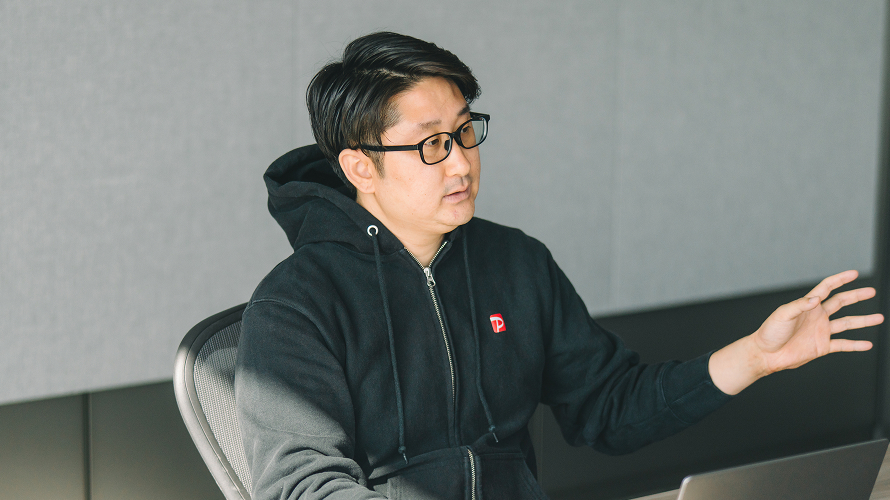
Delivering the PayPay × Binance Japan Collaboration Under Tight Time Constraints
One of the most memorable projects I have worked on recently was the PayPay × Binance Japan collaboration. To me, this project was about making it easier for first-time users to purchase crypto assets with confidence and peace of mind. We were required to deliver the service within a very short timeframe. Given those constraints, the first question I asked myself was, “What kind of experience would allow users to feel comfortable using this service?” Before discussing individual features, I focused on defining the scope. Should users only be able to purchase crypto assets, or should selling be included as well? What functionality was essential, and what could be phased in later? Clarifying those priorities was the starting point. At the same time, I spent a considerable amount of time researching competing services. I looked closely at what kinds of user interfaces were being adopted, what functionality users expected, and what level of experience would be necessary for the service to succeed. Based on those findings, I worked through the requirements one by one.
The most challenging aspect of the project was collaborating with a global organization. In most of my previous projects, development was handled internally within the PayPay Group, which meant there were many areas we could directly control. This project was different. Binance naturally has global standards, policies, and design principles. At the same time, we wanted to create an experience that felt intuitive and natural for users in Japan. Finding the right balance between those two perspectives was one of the biggest challenges.
For example, many terms in the crypto industry are displayed in English. However, not every user is comfortable navigating English-language interfaces. From our perspective, we wanted to make the experience easier to understand and more accessible. At the same time, the global team had its own design guidelines and constraints. Because of that, it was not enough to simply request changes. We had to clearly explain how a particular design decision would affect the user experience. To support those discussions, we conducted both quantitative and qualitative research. We observed how internal users interacted with the product, identified areas where they hesitated or became confused, and shared those findings with Binance. Being able to explain user behavior with evidence was critical in aligning both sides. Looking back, I don’t think my role was simply about defining product specifications. It was much closer to continuously thinking about how to create an experience that truly works for users.
Finding Possibilities Instead of Accepting Limitations
There are two values that have remained constant throughout my career at PayPay. The first is ownership. The second is the willingness to step beyond the boundaries of your role and take responsibility for what needs to be done. At PayPay, the mindset is rarely, “That’s not my job.” Instead, the focus is on what is needed to make a project successful.
I saw this clearly in the Binance Japan collaboration. The business team and the product team frequently stepped into each other’s domains, working together toward a common goal. That level of collaboration is one of the reasons we were able to move so quickly. Another thing that feels uniquely PayPay is the way we approach challenges. Rather than saying, “This can’t be done,” we ask, “How can we make it work?” In projects involving external partners, there are always things we cannot directly control. However, there are usually elements that are controllable. The key is identifying those areas and figuring out what actions are needed to move them forward. That way of thinking has stayed with me since my days working on P2P products, through my time at PayPay Card, and into my current role today.

Why PayPay Is a Unique Place to Take on Challenges
One of the most exciting aspects of working in the Crypto space at PayPay is the scale of our user base. Innovative technologies alone do not create value. What matters is whether those innovations can actually reach users and become part of their everyday lives. PayPay has a unique advantage in that regard. We have a large user base, strong customer touchpoints, and a widely adopted payment platform. That creates opportunities to bring new financial experiences to a much broader audience.
Another reason I enjoy working here is that PayPay encourages people to take on challenges, even in areas with a high degree of uncertainty. In many organizations, ideas with significant uncertainty are often dismissed because of the risks involved. At PayPay, the conversation tends to be different. Instead of asking whether something is too risky, people ask how it can be made viable. That environment is rare. Personally, I’ve been able to step beyond the traditional boundaries of my role and take on challenges in areas that interest me. Having the opportunity to raise my hand and pursue those challenges has had a huge impact on my growth.
Looking Ahead
I want to continue exploring the possibilities of new financial experiences. The Crypto industry is constantly evolving, with new technologies and ideas emerging all the time. What fascinates me most is not the complexity itself, but how we can make that complexity invisible to users. From a user’s perspective, the ideal experience is simple, intuitive, and seamless—even when the technology behind it is highly sophisticated. That is what I want to keep working toward: creating experiences that feel natural and accessible, while leveraging the potential of emerging technologies behind the scenes.
Why PayPay Is an Exciting Place for People Who Want to Challenge Themselves
One of the things I appreciate most about PayPay is the freedom to go beyond your defined role. Rather than limiting yourself to a specific function, you are encouraged to do whatever is necessary to make a project successful. At the same time, PayPay operates at an enormous scale. Even small product changes can affect millions of users. That scale gives product managers opportunities to work across product, technology, and business in meaningful ways.
Another aspect of the culture that stands out is the willingness to embrace challenges and learn from failure. The responsibility can be significant, and the work is rarely easy. But there is a genuine belief that trying new things is worth it.
For people who want to take ownership, broaden their expertise, and work on challenges that have real impact, I believe PayPay is an incredibly rewarding place to build a career.

*Information such as job openings and employee affiliations is accurate as of the time of the interview.