


The Project Story series focuses on what takes place behind the scenes of PayPay Group’s significant projects.
Through personal anecdotes of those who were in charge, we delve into the difficulties and the pivotal mindsets which led to the success of each project.
From February 5, 2024, PayPay started a service that allows users who have already verified their identity with PayPay (eKYC) to skip some of the procedures required to open an account with PayPay Bank and PayPay Securities via the “PayPay Bank” and “Invest” mini apps, such as photographing their ID or taking a selfie.
We spoke with members from the Strategy Planning Team that drove this initiative toward its rollout.

Yoshinori Kanda
Manager, Strategy Planning Team, Finance Business Strategy Department, Finance Business Strategy Division, Finance Business Group
I joined PayPay in November 2021, after working in sales and planning in the insurance industry and business development in the human resources industry. Currently, as the Manager of the Strategy Planning Team, I am in charge of strategic planning and execution of initiatives to expand PayPay’s sphere of influence in the finance field, as well as planning new businesses and services.
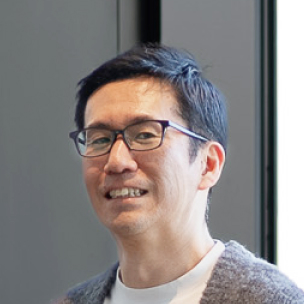
Takashi Yanagisawa
Strategy Planning Team
I joined PayPay in September 2022 after working at a megabank. I am responsible for planning new businesses and services around this project.
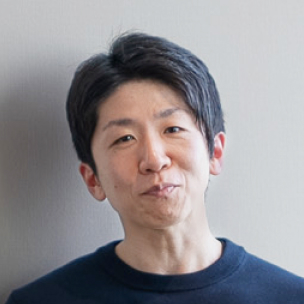
Kohei Baba
Planning Team, Finance Platform Development Department
I joined PayPay in November 2023 to pursue challenges in a relatively new field, after working in sales and planning in the credit card industry. I am in charge of planning to enhance the cross-use of PayPay financial services. My primary role since February this year is in digital payroll.

Kenta Tsugueda
Strategy Planning Team
I joined PayPay in May 2023 after building my career in a fintech startup and the IT industry. Right now my responsibilities include planning new businesses and services for PayPay, including the launch of new businesses for corporate clients.
Cross-Corporate Collaboration for Easy eKYC Procedures
Tell us about your current responsibilities
Kanda:
So far, I’ve been involved in growing PayPay’s peer-to-peer money transfer service, expanding our finance services, and planning new ones.
Regarding the project we’re talking about, I am responsible for its overall management. There were so many people involved that a delay in one task would affect the timeline of many others. I sorely felt how difficult it is to manage a large-scale project like this one.
On the other hand, looking at it from the perspective of developing a new business, this initiative was very satisfying because it is a groundbreaking service that removes the hassle of financial services that ordinary users feel.

Yanagisawa:
I have been primarily involved in this project since joining the company. I have worked on a similar project at my previous job, but this one turned out to be more challenging than I had imagined, which also meant it was more rewarding.
Baba:
In this project, I was mainly in charge of preparatory work for service rollout. As I was new to the company, there were many unknowns in proceeding with the tasks, but thanks to the support of colleagues around me, I was able to follow through until the release of the service.
Tsugueda:
I am involved in several projects and services, but for this one I am mainly responsible for figuring out the details of new features for the future. Currently, the service is still only offered to companies within the PayPay Group, but it can be expanded to enterprises outside the group down the road. I find joy in thinking what the next steps should be with respect to services that have the potential to change people’s lives and behavior.
You rolled out a new service on February 5, which simplifies the eKYC procedure when opening an account. Can you tell us briefly about what you improved?
Tsugueda:
In the PayPay app, there are mini apps called “PayPay Bank” and “Invest” that any PayPay user can use with only a few taps (*there are screening procedures when opening an account). To use these financial services, users must enter their personal information, photograph their ID (e.g. a driver’s license) and take a selfie to verify their identity.
However, PayPay users may feel that it is bothersome to have to go through the eKYC procedures again when they want to use PayPay Bank or PayPay Securities, even though they’ve done it already on the PayPay app.

This project provided a drastic improvement to the nuisance involved in opening a new bank or securities account. If a user completed eKYC on PayPay, they can now skip taking photos of their ID or themselves when opening an account. It now only takes two steps to open a new account with PayPay Bank, and three with Securities.
Related link:Significantly Improved Procedure to Open an Account with PayPay Bank and PayPay Securities, by Linking Identity Verification Information from the PayPay App(Pressrelease Feb.5th, 2024)
Looking back, how do you feel about the project?
Kanda:
Shortly after the service was launched, I asked a friend of mine to open a PayPay Bank account and he said, “I’m amazed at how quickly I was able to open an account. It only took two minutes while I was in a jam-packed train.” I was so happy to know that this service has made it possible even for commuters in a packed train to open an account with their thumb in two minutes, as opposed to having to visit a branch with their personal seal and driver’s license. Hearing my friend say that made all the hard work worthwhile.
In fact, until now, approximately 30% of users who started the account opening process have abandoned it when required to take photos for eKYC. However, we have been able to significantly decrease this churn rate with our new service. I think there was a significant impact for the entire PayPay Group.
Yanagisawa:
Thanks to the teamwork of numerous colleagues, we were able to provide a totally new service. I am truly grateful, and I wish to take this opportunity to express my gratitude.
This service is available to users who have completed eKYC with PayPay. We are very thankful to the immense number of users who have done eKYC, or over 25 million, as of November 2023.
To name a few of the departments involved in this project, there is the Customer Management Department for one, which always thinks of measures to have more users complete eKYC.
Since this service was not available anywhere else, the Policy Planning Department took the time to explain it to all external parties involved. In addition, the Legal Department went to PayPay Bank and PayPay Securities many times to draft the contracts from scratch, since there was no precedent whatsoever. Also, the Legal joined forces with us in considering how to handle personal information, for which we are thankful.
I also want to express my appreciation to everyone at PayPay Bank and PayPay Securities. The three companies worked hard together to launch this service.

What was the hardest part of the project?
Yanagisawa:
We had a difficult time aligning the eKYC standards and methods at PayPay with those of PayPay Bank and PayPay Securities. At first glance, from the legal perspective, it looks like both companies have the same identification procedures in place. However, we found that there were different standards and practices in each company when it came to the details, like characters that cannot be used when registering a user’s address (resulting in inconsistencies), criteria and methods used to determine how a character could be read (resulting in some irregular kanji readings not being recognized), and the readings of such irregular characters.
PayPay Bank and PayPay Securities have their own perspectives and different ways of thinking about risk, so through trial and error, we worked together with the operations and client management departments for many months to find a way to get all three companies aligned. As a result, we were able to examine our service from multiple perspectives and offer it in a more robust form, so it turned out for the better.
Kanda:
Both the banking and securities industries have a long history, which translates to having their own common practices and rules. So I think there was some confusion and skepticism at first when PayPay, a young company, took a new approach. We did not give up despite the lack of trust, and by persistently communicating what sort of society we are aiming for and how we are going to accomplish that, we were able to successfully make it to rollout. Now it’s up to us to continue revamping the service so numerous companies would be willing to use it.
What do you want to achieve in the future with this service?
Yanagisawa:
After launching this new service, we received feedback from users that it became a lot easier to open an account.
Going forward, I would like to expand this feature to services outside the realm of PayPay’s financial services. My goal is to make it common knowledge that eKYC with other services is unnecessary as long as you do it once on PayPay, and changing your address information on PayPay will automatically change the same information in other services.
Kanda:
I hope that by expanding this eKYC service beyond PayPay Bank and PayPay Securities, we can encourage as many users as possible to use other PayPay products. For now, I will proceed with creating the necessary features.
Baba:
Few users may realize that account opening procedures on PayPay are less of a hassle now, since you usually only open an account once for any service. Having said that, it would be nice if people thought, “When did life become this much easier?” somewhere down the line as we keep providing a more convenient experience. We would like to use this eKYC service as a stepping stone to for expanding the cross-use of payment and finance services, and further contribute to the growth of the entire PayPay Group.

Work as a Team of Experts Leveraging Each Member’s Strengths
What values do you uphold at work?
Kanda:
The most important of the PayPay 5 senses for me would be “Believes in our product & team.”
In my past experiences in developing new businesses, I have often been reminded that what I think is right is not always so, and that I should consider how users feel, not just some theory. I believe it is important to trust the opinions of team members and other stakeholders, rather than proceeding with work on my own.
Yanagisawa:
For me, it’s “Be sincere to be professional.”
Everyone has their own strengths and weaknesses, so I consider it crucial to be firmly committed to one’s area of expertise while involving the team in your work. The Strategy Planning Team is currently doing just that.
Baba:
“Ego is not welcome, communication is necessary.”
I value communication because it’s a hybrid work style, communicate primarily through writing, and have few opportunities to meet face-to-face. PayPay as a group has many excellent employees, so things progress smoothly even if, say, some information is lacking. But I try not to take advantage of this and make it a point to share information frequently as I go about my daily work.
Tsugueda:
I would say “Speed is our bet on the market.”
I try to be quick with my work as much as possible. Since we mainly offer financial services, there are times when it inevitably takes longer than we want to provide services, due to negotiations with external parties and development timelines. However, I myself try to produce output ASAP, perhaps a day earlier than scheduled, or even 30 minutes!

What is the culture of the Strategy Planning Team?
Baba:
To be frank, we’re a crazy good team. Before I joined PayPay, I imagined a more dog-eat-dog vibe (laughs), but that was not the case at all. The team has a friendly atmosphere, and we keep an eye out for each other. Also, each person has his or her own area of expertise, plus we have wonderful chemistry, so working here is quite pleasant.
Tsugueda:
We often work on our own since each member is in charge of a different project, but we more or less have similar problems. Thankfully, everyone is approachable, so it’s relatively easy to get advice even if we may be working in different areas.
Yanagisawa:
Since it’s work, there are times when we have to say uncomfortable things, but the team’s atmosphere is good, and we have the luxury to honestly debate with each other.
Kanda:
Everyone is professional and I feel comfortable entrusting them with tasks. I believe that it is the leader’s job to create an environment where each person can bring out their strengths and make up for each other’s weaknesses, so that the team can deliver most efficiently and effectively.

PayPay is the Harbinger of New Financial Services and a More Convenient Society
Please share with us your goals and missions you’d like to accomplish in the future
Kanda:
I want to create the future of finance with PayPay. This has been my mission since I joined the company, and I aim to create new financial businesses and services that are the most stress-free for users.
Tsugueda:
I was thinking the exact same thing. I believe that future financial services will be more convenient for users. I certainly want to create one good service at a time so that PayPay can be at the center of that movement.
Baba:
I joined the company because I wanted to make the world more convenient with PayPay. I think that with PayPay’s people and technical capabilities, we can provide unprecedented value in multiple industries, not just in payment and finance. By eliminating any inefficiencies or hassle in everyday life through PayPay, I want to create a world in which people think to themselves, “Life’s thankfully become easier,” even if the services we create may not necessarily be eye-catching.
Lastly, a message for our readers please!
Tsugueda:
Although many members have a background in finance, I come from an IT company. I think PayPay is a place where people from various backgrounds can thrive.
Although many members have a background in finance, I come from an IT company. I think PayPay is a place where people from various backgrounds can thrive.

Baba:
Everyone in the team is a team player, although we are all experts in our respective fields. If you are the kind of person who places importance on collaborative work, I’m sure you will enjoy working at PayPay.
Kanda:
I believe that financial services in Japan today still are inconvenient. All team members work every day with the idea of creating financial services of the future, hassle-free services which eradicate such inconveniences. If you are going to work here, it is necessary to stand on your own two feet, rather than just wait for work to be assigned.
If you have a similar vision as ours, PayPay is the best place to make it a reality. I look forward to tacking new undertakings with you!

Current job openings
*Job openings and employee affiliations are current as of the time of the interview.