



Welcome to the Project Story series, where we delve into the behind-the-scenes of PayPay group’s major projects. This series spotlights key projects, uncovering the challenges faced and the dedication of each team member through in-depth interviews.
This time, we spoke with the team members who tackled the challenge of linking transaction histories and authorizations (the process of querying credit information with a credit card company to confirm if a transaction can be processed) between PayPay and PayPay Card, based on user feedback. Their efforts contributed to delivering a unique and value-added experience for PayPay users.

Kenta Mikami
Division Head, Product Division 1, Technology Group, PayPay Card Corporation
I joined Yahoo Japan Corporation (now LY Corporation) as an engineer during the launch of Yahoo! JAPAN Card, the predecessor of PayPay Card. After contributing to the service’s growth and the launch of PayPay Card, I transferred to PayPay Card Corporation in 2023, in line with the organizational restructuring of the product development team.
Takanori Hozumi
PPCD Feature Team, Technology Department, Financial Services Product Division, Product Group, PayPay Corporation
After transitioning from a sales role at a manufacturer to an engineering position at an IT company, I joined PayPay in January 2019. Since then, I have worked as a backend engineer in the Merchant and Payout teams, and I am currently a member of the PPCD Feature Team.

Takayuki Inoue
PPCD Feature Team, Technology Department, Financial Services Product Division, Product Group, PayPay Corporation
After working as a consultant at a foreign software company, I joined PayPay in October 2020. I have worked as a backend engineer for the Finnet & KYC Team and served as a tech lead in the Bank Team. Currently, I am a member of the PPCD Feature Team.
Recognizing the Need for a Unique Customer Experience from User Feedback
Can you provide an overview of the project to link transaction histories and authorizations?
Kenta:
In this project, we aimed to link the two pieces of information generated when using PayPay Cards: “capture” and “authorization.” This linkage enables us to identify PayPay merchants.
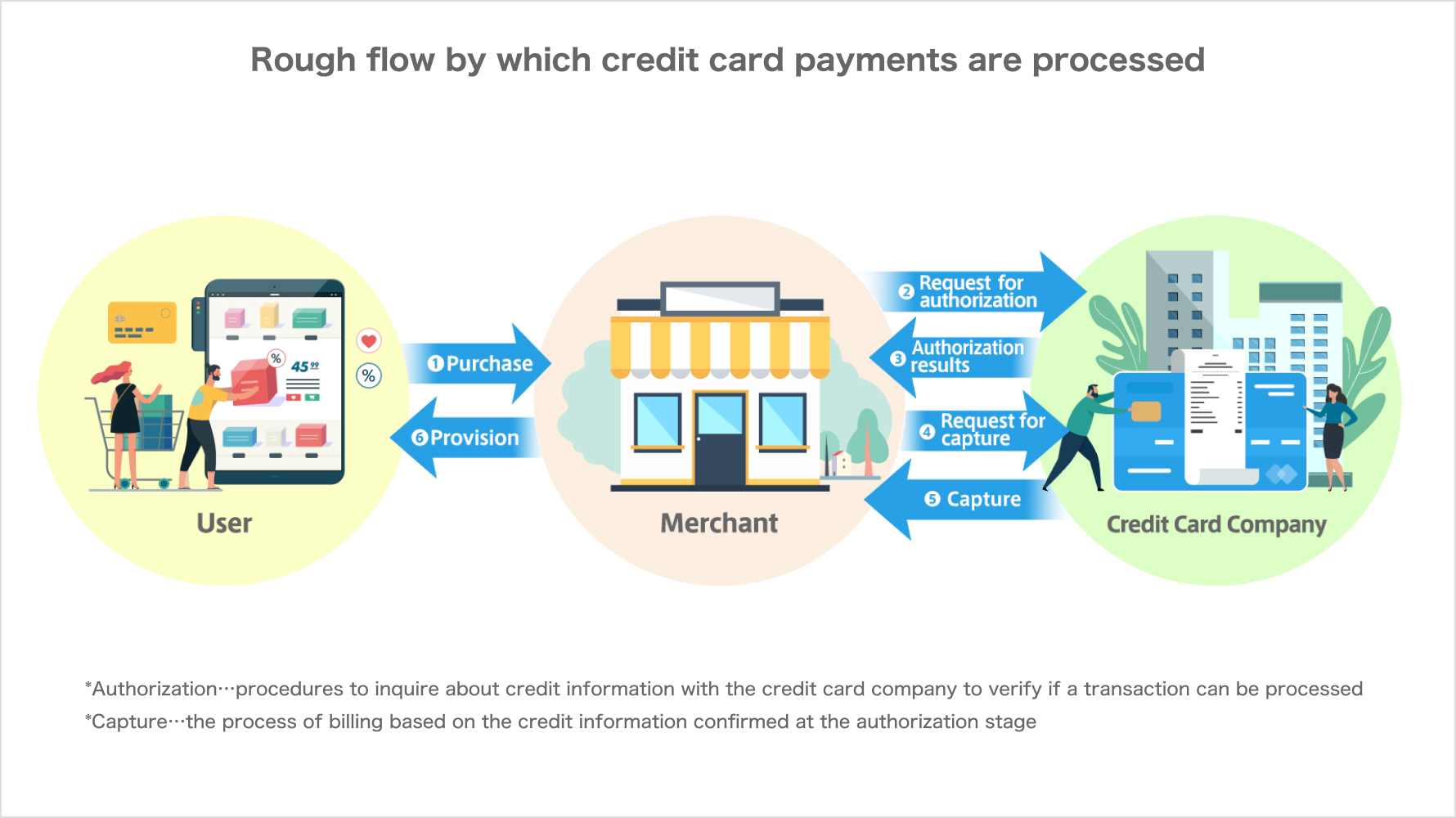
The intention was to provide users of the physical PayPay Card with the same value-for-money experiences as PayPay users through campaigns like the Cho PayPay Matsuri. However, the existing system did not link PayPay Card’s capture and authorizations, making it impossible to identify PayPay merchants and apply the campaign benefits.
Why was it important to create a unified advantageous experience for both PayPay Card and PayPay?
Kenta:
We wanted to enhance the synergy between PayPay and PayPay Card, creating a unique customer experience that only the PayPay group could offer. In the past, we introduced features like PayPay Credit, which allows users to use their PayPay Card on the PayPay app with differentiated point rewards, as part of our ongoing efforts to foster synergy.

Kenta:
Our commitment to create synergy grew even stronger when we decided to stop allowing credit cards other than PayPay Cards to be registered on PayPay starting May 1, 2023. This decision sparked a lot of public debate, prompting us to seriously consider the future of both PayPay and PayPay Card. We discussed extensively across the group, focusing on questions like, “How can we encourage users to make PayPay Card their primary card?” and “What new customer experiences can only PayPay and PayPay Card provide?” Through these discussions, we concluded that unifying valuable experiences would serve as the cornerstone of our synergy creation efforts.
Achieving Practical Application of Matching by Challenging the Impossible
How did the project progress?
Kenta:
Since modifications were necessary for both the PayPay Card and PayPay systems, we collaborated closely with the PayPay team throughout the development process. The PayPay Card team focused on improving the matching accuracy between capture and authorizations to a practical level.
Takayuki:
Our mission on the PayPay team was to create a system that could identify PayPay merchants based on the capture and authorization information linked by PayPay Card and apply the campaign benefits. I was responsible for ensuring that PayPay Card’s payment data was reflected in real-time on PayPay. Given the differences in data formats between the two companies, data conversion was also a critical task.
Takanori:
I was in charge of building the “merchant database” to identify merchants on PayPay based on information from PayPay Card. While PayPay Card had its own merchant dictionary in which merchant information was stored, expanding it raised concerns since it was part of PayPay Card’s core system. Considering the significant development load after launch and the necessity for PayPay members to access PayPay Card’s core system, we ultimately decided to construct a new database for PayPay from the ground up.

What was particularly challenging?
Takanori:
One of the biggest challenges was ensuring that the correct merchant name was displayed when referencing the merchant database from payment data. The payment data did not contain a definitive key to identify merchants, which required us to create a precise key setting. Although I was just one of the engineers, I took ownership of the data analysis and proposed solutions for the key settings. I held nightly meetings with the product manager for 30 minutes to an hour and presented the compiled materials the following morning. I found the process of forming agreements through meticulous communication to be quite enjoyable.
Takayuki:
Reflecting credit card-specific transactions, which didn’t exist on PayPay, initially posed difficulties. While the approach itself was straightforward, we needed to collaborate with Mikami-san’s team to identify and address every possible scenario thoroughly. To prevent any miscommunication with the PayPay Card team, I made sure to continuously update my knowledge and align our understanding through documents and meetings. Despite our busy schedules, we remained committed to maintaining high quality without compromise.

Kenta:
At the working level in PayPay Card, enhancing the matching accuracy between capture and authorizations was a major challenge. In fact, linking capture and authorizations is uncommon in the credit card industry, and experts often deemed it impossible.
During the development phase, we struggled to achieve the practical target level for matching accuracy. In those challenging times, as a manager, I was determined to see us through. I encouraged each team member to take ownership of their tasks by repeatedly asking questions such as, “How can we achieve this?” and “How can we recover from delays?” Instead of simply increasing working hours, we focused on identifying issues through these questions and collaborated with other teams to brainstorm and implement solutions. As a result, our team proactively addressed each challenge, allowing us to recover lost time, stay on track and on schedule.
The “Infinite Possibilities” of the PayPay Group
What were the outcomes of the project?
Kenta:
We have taken a significant first step in delivering a unique customer experience that only the PayPay group can offer, thereby enhancing our synergy. We have received positive feedback from users on social media, which was the catalyst for this project, particularly regarding the ability to draw PayPay Scratch Lottery using the PayPay Card. This feedback, along with the favorable impacts on GMV (Gross Merchandise Value) and the number of PayPay Card issuances, clearly reflects our success.

Takayuki:
This project brought PayPay and PayPay Card together as one team, united by a common goal. Moving forward, we will continue to focus on enhancing the synergy between the two companies to improve user experiences. The relationships built through this project will serve as a strong foundation for even greater collaboration within the group.
Finally, do you have any messages for our readers?
Takanori:
PayPay is expanding its services across various financial domains, promoting seamless customer experiences through group collaboration. This results in numerous large-scale, high-difficulty projects that require problem-solving through discussions with multinational team members. While challenging, these projects are highly rewarding. If you enjoy tackling complex projects and creating valuable services for users, we would love to have you join us.
Takayuki:
The PayPay group is constantly evolving to provide high-quality, convenient products to a vast number of users. By solving technically challenging issues daily, engineers can undoubtedly grow in this environment. If you wish to take ownership and work in a challenging setting, the PayPay group is the perfect place for you.
Kenta:
PayPay Card is entering a phase where we will realize even more value unique to the PayPay group, as demonstrated by this project. We aim to envision and actualize experiences that traditional credit cards could not offer. Our company empowers each individual to proactively build the organization needed to maximize product value.
The synergy between PayPay and PayPay Card holds infinite possibilities. Let’s create the future of cashless payments together in an environment that fosters new customer experiences.
Current job openings
*Job openings and employee affiliations are current as of the time of the interview.