


Ambreesh Arya
Hi, I’m Ambreesh Arya! I joined PayPay India almost a year ago as a Sr. Product Designer. I’m part of the O2O team and take care of the Gift Voucher product.
I’ve always been excited about Japanese culture, customer centricity, and rich history. I first experienced it in 2016-17, when I was interning at Ritsumeikan University, Kyoto. Things got exciting when Pallavi (Designer @ PayPay, & my senior from college) told me about PayPay India and the design opportunity. Here I am, designing for Japanese consumers, solving complex product and business problems.

Nidhi Patidar
Hi, I’m Nidhi! I joined PayPay India as a Product Designer in April 2024, transitioning from an architecture degree to product design after two years at an Indian startup. My priority after joining PayPay has been to understand Japanese users, payments ecosystem and overall design landscape. Japan has always fascinated me—from the anime I grew up watching, like Doraemon and Pokémon or Ghibli Studio, to Japanese architecture I learned about in college. Now, I’m excited to experience it all firsthand on my upcoming trip and apply fresh insights to create products that truly resonate with Japanese users.
Summary
In this article, we explore the intriguing balance within Japanese design, which merges minimalism with complexity. Through comprehensive research and discussions with colleagues who have firsthand experience in Japan, we delved into the core principles that define the Japanese design landscape.
To engage readers and designers from India, we also highlighted our collaborative approach as designers, showcasing how we tackle complex business and user challenges. By working together, we aim to create impactful solutions that enhance individual lives and contribute positively to Japanese society as a whole.
Agenda
- Understanding Japanese Design Landscape and Users
- Why are Japan’s products designed this way?
- Comparative Study : Indian VS Japanese Consumer
- Future Evolution of Japanese Design
- Designing effectively for the unfamiliar demography: Collaboration & Process
- Conclusion: How understanding culture empowers designers?
Understanding Japanese Design Landscape and Users
As designers, we are generally curious about almost everything, How it looks (definitely!) but also how it works and how the same problems are solved differently.
To understand the Japanese design landscape better, we immersed ourselves in Japanese design principles through research, discussions with colleagues who have experience of living in Japan and the ones who saw the evolution of digital design from the early 2000s to now first hand.
We also collected and created a mood board with best design examples of different sources like Public Spaces, Urban Design, Architecture, Media Consumptions, Ads and Banners, and of course digital design. After this we looked for existing patterns in these examples.
First Impressions – Complex, Simple, & Thoughtful
After identifying existing patterns and specific features in these examples, we categorized them broadly. We found that Japanese design is balancing two worlds together – One of minimalism, clean and simplicity, another with a bit of chaos, dense information, and layering of different visual elements.
For example, In architecture, both traditional Japanese houses and modern structures, as well as Zen gardens and In design everyday products from brands like Muji – emphasize minimalism, clean lines, and simplicity.
In contrast, graphic design in Japan often features high information density. This is visible in movie posters, flyers, and public information systems, such as the Tokyo subway maps and screens, which layer various visual elements to convey complex details. This design style also extends to popular Japanese websites, which often prioritize dense information and layering.

While the calming aesthetic feels timeless, the information layering though feels overwhelming at first, made us curious—why does it resonate so deeply with Japanese culture, and how does it manage to work so seamlessly within their daily lives?
Why are Japan’s products designed this way?
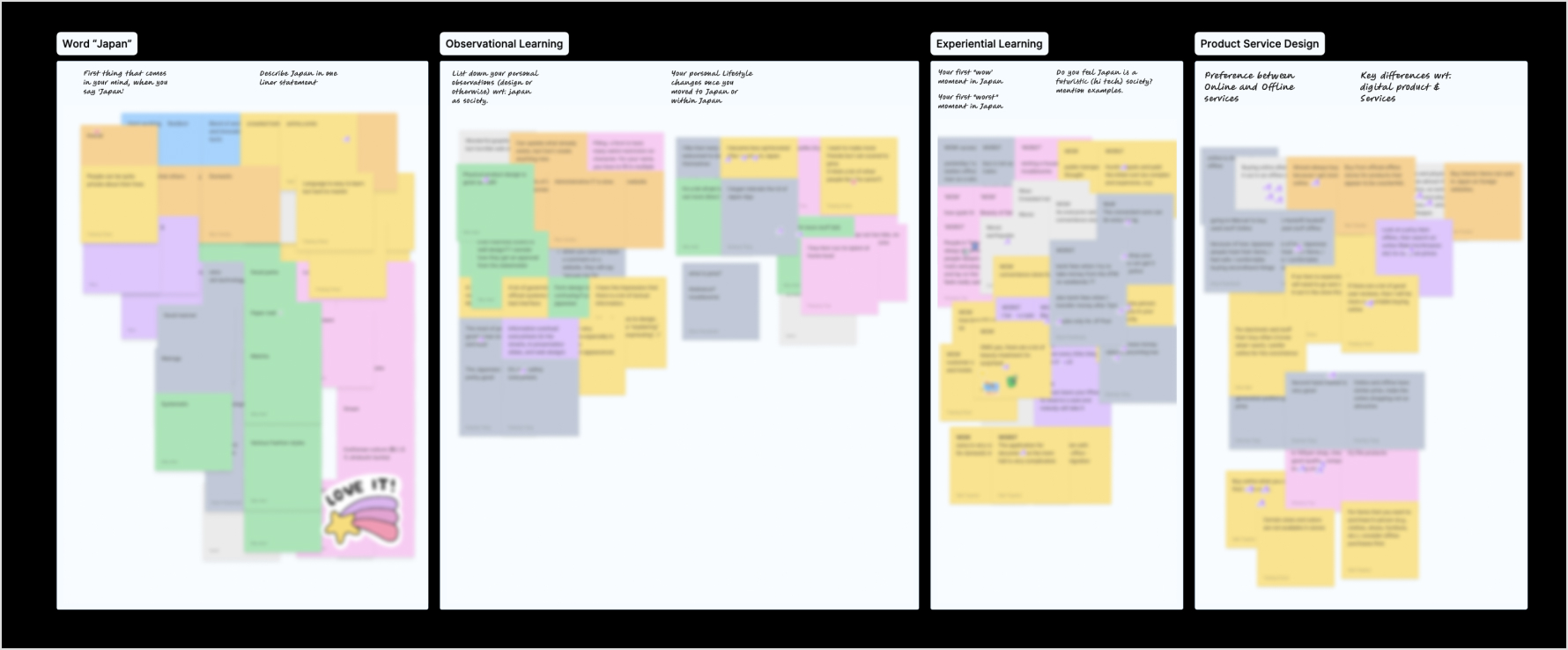
To understand the above mentioned differences better, we did a small workshop within the O2O design team. They are all from different parts of the world (Indonesia, Hong Kong, China, Japan, & India). It was a great learning experience for most of us in the O2O team.
Based on our discussion, research and understanding, we have categories the reasoning into 3 parts – Culture, Language, and Technology.
Culture
High Context Culture
Anthropologist Edward T. Hall has talked about “High Context Culture” in his book – Beyond Culture. In his definition- The high context cultures are those in which the rules of communication are primarily transmitted through the use of contextual elements (i.e body language, person’s status, tone of voice) and not explicitly stated through words.
In low context cultures in which the information is communicated primarily through language and rules are explicitly stated.
Japan, as an island nation, developed its culture and traditions with relatively limited external influence for a significant period. This unique geographical and historical context contributed to its distinct way of life and perspectives, which also leads to communication relying heavily on non-verbal cues and shared understanding.
However, this very characteristic makes communication on apps, websites, banners, and ads more information-dense—packed with text and visuals to ensure clarity and seamless comprehension. These cultural nuances might also explain why Japan pioneered the invention of emojis, as a way to convey meaning efficiently and emotionally in digital communication.
Psychology (Holistic VS Analytical)
Book “The geography of thoughts” written by Richard L. Nisbett talks about two different types of thinkers- Holistic and Analytical.
In the holistic style of thinking, everything is interconnected. It sees the whole as one and focuses on context, environment and balance. In the analytical style of thinking, It works based on the identification and categorization. According to Nisbett’s research, East Asians think holistically, Westerners think analytically.
The holistic thinking style in Japan stems from the early societal need for cooperation and balance, shaped by the island’s geography, resource dependence, and social structure. In the formation of Japanese society, migrants from various nations lived together, relying on each other for survival through activities like agriculture, fishing, and trade. This led to the development of a highly group-oriented culture over individualism. Additionally, frequent natural disasters fostered a deep respect for nature, reinforcing a worldview that saw humans as interconnected with their environment, a key aspect of holistic thinking in Japan.
This holistic thinking style also persists in Japanese art, which emphasizes the relationship between objects and their surroundings, like nature or people, rather than focusing on an individual element. In contrast, Western art often highlights a single object or person. Traditional Japanese art reflects a broader view, showing the interconnectedness of elements within a space, reinforcing the idea of harmony and relationships.
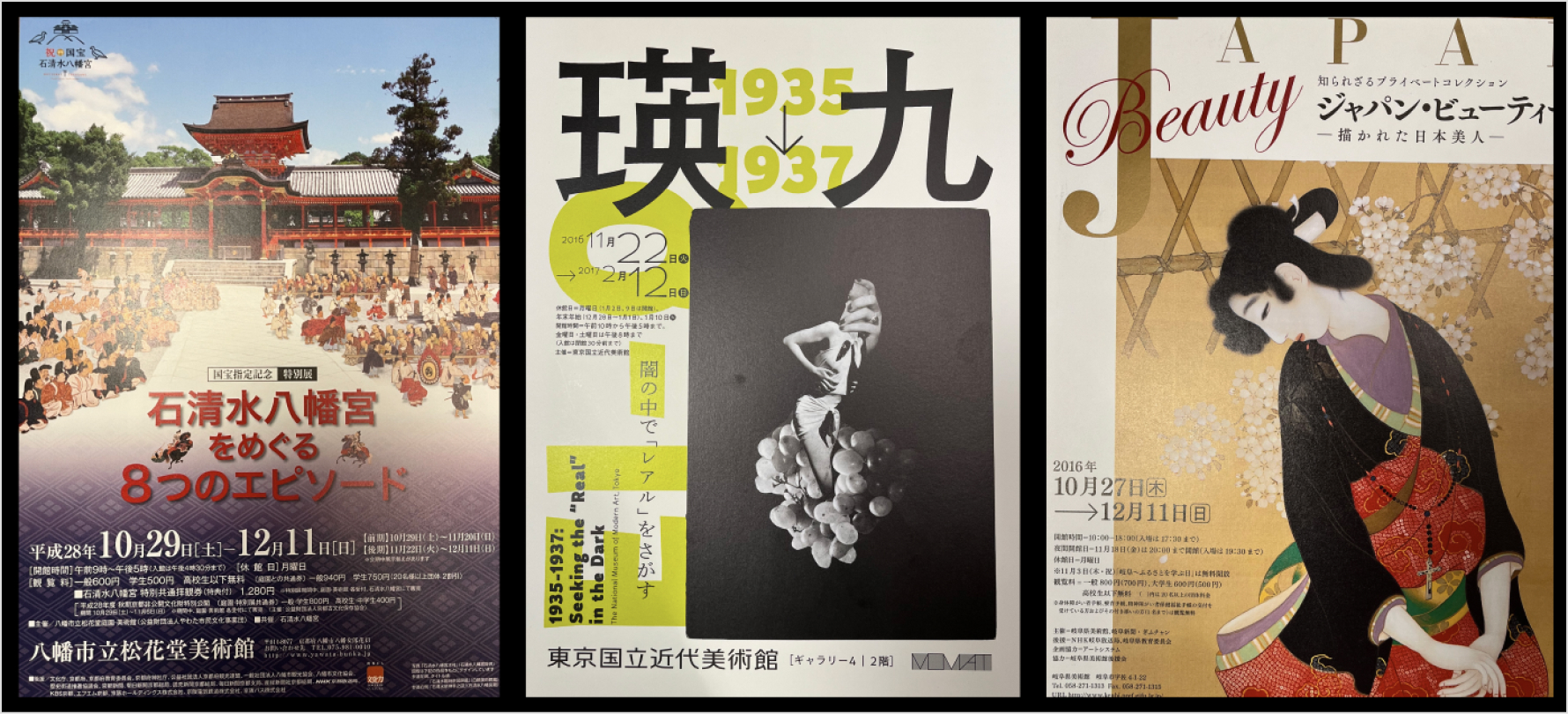
As a result, holistic thinking allows Japanese people to naturally process and consume more information by considering the relationships and larger context in which elements exist.
Consumer Behaviour
Japanese consumers need a high degree of assurance before buying anything. They inquire about the descriptions and technical specifications of the product/service.
Restaurants putting exact same plastic replicas of the foods on display is one such example. It evokes a stronger hunger urge than a two dimensional photo and also influences their choices while ordering.
This consumer behavior results in websites, apps, and even ads in Japan containing more information comparatively.

Language
Japanese Language has three different scripts, two of which are based on alphabetic characters i.e. Hiragana and Katakana and the other one is Kanji which is based on Logographic characters and has more than 10,000+ characters. These three scripts have denser text and are often used together at the same time.
This makes Japanese users accustomed to remembering a lot of information, and their brains are trained to handle it efficiently.
Additionally because Japanese fonts are visually complex, they take up more space, contributing to the ‘crowded’ look of websites. This language also limits the creation of clear visual hierarchy, further affecting design aesthetics.

Technology’s Influence
Japan grew rapidly post world war II (between 1950-70), and the reason was manufacturing and global trade. By the mid 80’s, Japan’s per capita income was one of the highest in the world, so much so that Japanese people had a lot more purchasing power and spent it on high value products to support their lifestyle.
Hence Japan’s technological revolution happened before the rest of the world. As a result, Japanese users were introduced to mobile technology, with keypad feature phones including cameras or 3G by 2001. These early mobile interfaces had jam packed information by design to allow for easier navigation on small screens. Same heavily detailed, information-rich style then also carried over into web and app design, shaping the norms that still exist today. We can easily find these differences in multiple products and websites. One such example is – Yahoo!(US) & Yahoo! JAPAN (JP).

Japan’s aging population often uses older computers and software, which affects web design. Many websites present all information on the front page, making them look cluttered. This approach helps older users navigate easily but can feel overwhelming. Balancing accessibility with a modern design is a key challenge.
It’s fascinating to see how Japan’s design is shaped by the combination of multiple factors—culture, technological innovation, and language—rather than any single one. While other countries like Korea or China also share linguistic factors or some other countries of the world might also share the relative isolation factor or holistic thinking culture, yet it is the convergence of all these influences in Japan that creates a truly distinctive design culture and aesthetic.
Comparative Study : Indian VS Japanese Consumer
India is the 4th largest economy (Japan is the 3rd largest economy) and one of the fastest growing markets and youngest population in the world. India has become one the most lucrative markets in the world, as more and more people are joining the workforce, ease of doing business, internet accessibility, and cheap smartphones have made it easier for internet tech giants to penetrate deeper into Indian consumers.
Whereas Japan is a developed nation with better infrastructure, governance and most aware consumers in the world. On the other hand, Japan is suffering from slow growth, an aging population, and less skilled working people.
Based on our findings and discussions, We can broadly categories these difference in 3 Parts.-
- Demography – Tier Structure VS Aging Society
- Quality VS Quantity – Cost Sensitive VS Pay for service
- Growth – Focused VS Masses
Demography
In India, tier structure is one of the prominent ways to categorize demography.
For example, Tier 1 city consumers are the most desirable ones, and have more money to spend. But mass lies in Tier 2, and Tier 3 cities. Other major factors are education, tech adoption, and Income level.
In the context of Japan, It’s the aging population that makes Japanese consumers different from the rest of the world. As per data, 36% of the population is above 60 years old. There are a few other factors such as income level, and urban VS rural distribution.
Another major difference is the language. India’s language diversity makes it one of the toughest markets to crack than the Japanese.
Quality VS Quantity
As we all know, Indians are cost-sensitive consumers. We love to bargain and try our best to get services cheaper or free (in the case of online services)
In contrast, Japanese consumers know what they want and look for specific products or services. If required, they love to pay to enhance their experience and to build trust.

In the above example, we can see how Starbucks curates their product offering differently based on demography and consumer behavior. In the context of Starbucks JP, there is no direct call to action (CTA) as the Japanese people want to know about the product/service first before making a choice. Whereas Starbucks IN is focusing on order and volume.
Growth
India’s 52% population uses the internet and it’s growing very fast because of multiple factors – Cheap Smartphones, fast internet access and increase in income. In another aspect, acquiring a new consumer in India is much cheaper than in Japan.
Quality of the consumer is the key differentiator here. Even though India has one of the largest internet users, App market impact is very very low in comparison to Japan’s app market.
Based on the data, India’s overall app market revenue is ~$2.7B compared to Japan’s ~$31B.
Other few interesting stats to look at:
- Avg. revenue per download is ~$0.09 for India and ~$14.39 for Japan.
- In-app purchases only contribute ~$0.57B of India’s app revenue, whereas it is almost ~$27B for Japan.
These data points show that the Japanese consumers care for quality over quantity. They decide what they want to consume or see on their digital devices (Mobile, Web, or Any other multimedia format).
Future Evolution of Japanese Design
In the age of the Internet, Japan’s historical relative isolation is no longer a barrier. Global companies have expanded their reach, and apps like Google Chrome, Google Maps, Twitters [now x.com], Instagram, are now the most used apps in Japan, especially with the younger demographic.
Also as more and more diverse people are coming to Japan and bringing their culture, knowledge and practices. Slowly we are seeing some change happening in consumer’s behavior as well as in digital product design practices.
PayPay is not an exception to the global trend. Trends like – clean, structured and easy to navigate designs. If we compare our 2018-19 design with the existing one, you would clearly see the differences.

Designing effectively for the unfamiliar demography: Collaboration & Process
As designers residing in India, the above exercise helped us in building context for Japanese consumers, culture and landscape. In addition to this having a diverse team that is always ready for collaboration significantly helps the design process.
We are a team of dozens of designers and UX writers, spread across products and group companies. Everyone in the team brings a great level of expertise in their respective fields – Design, Research, and Writing.
PayPay being one the most used products in Japan with over 66M+ user base (as of October 2024), provides us a great platform and opportunity to solve the complex business and user’s problems, which have a greater impact in individual’s life and overall society in general.
It also imposes a great challenge in front of us- such as language constraint, design ambiguity, uniformity, scalability, collaboration and many others.

The PayPay Design team has overcome these challenges by implementing simple yet effective processes among the designers, writers, and other stakeholders. To explain, we have broken it down into 4 simple terms.
Availability
PayPay Japan design team works remotely and starts early (3.5hrs to be precise) than the PayPay India design team. To make sure the fair level of overlap with one another, we update our start and end times based on our availability. It helps us in planning our day in a better way and being mindful about others’ working hours.
Collaboration
Design Team
We have 4 different collaborative sessions in a week. 2 with respective product divisions (O2O, Core App, Payments etc.) and 2 with the overall design team. These sessions provide us a platform to share the design progress, do brainstorming, gather feedback, assess the design and product impact.
By sharing our design solutions with other designers, helps us in reducing ambiguity at the design lever and reinforce the design practices into our design process.
At an individual level, It improves our presentation skills, storytelling capability, and design documentations.
Product Division
For high impact projects/features, we share our design in a larger forum (PM, EM, Product Owner, Head of Business, and Head of Product) to get the early feedback.
These by-weekly collaborative sessions help us in designing better solutions in line with the company’s vision, goal, and user’s needs.
Coffee Breaks/Breakout Time
As most of us are individual contributors and working remotely, we hardly get any time to discuss or chit-chat apart from work. To solve this, we have breakout time zones (so called coffee breaks). During these breakouts, we do some team building and fun activities. This way, we connect with each other and at the same time improve our productivity
Design Workshop
This is one the most prominent events and occurs once in a month (last working Friday of the same month). In this session, we conduct brainstorming workshops, share insights, and do some knowledge sharing among the designers.
It is an optional “Work from Office” day for all the designers staying and working in Japan. This enables our team to do more while having fun.
This collaborative environment facilitates knowledge sharing and support structure, which makes it easier to create effective designs for Japanese users while working from India.
Conclusion: How understanding culture empowers designers?
Culture is nothing but a pool of shared knowledge, which is passed down from generation to generation. It also gives us the context, a reference point around which a particular society has evolved. Most of the time we miss the obvious, simplest form of these nuances which tend to have a larger impact.
For us (who have very limited knowledge about the Japanese consumer and culture), this activity helped us in building our own understanding (pool of shared knowledge) and hypothesis around how people think and process information, and eventually helping us become more and more aware of Japanese consumer, market and trends. It also allows us to move beyond our own biases, and helps us design solutions that truly meet the needs and expectations of target audiences.
Arigato Gozaimasu
In the end
Thank you for reading this article. This is all the content of this article. We hope you find the insights of this presentation useful for your work and design career. In the future, we will post more interesting articles like this, so stay tuned and follow our Design Blog [Design Talks]!

*Job openings and employee affiliations are current as of the time of the interview.