




The Project Story series delves into the behind-the-scenes of PayPay group’s big projects. Through interviews with key personnel, we deliver real-life stories from the frontlines, showcasing the barriers faced and the dedication of each team member involved in these significant initiatives.
This time, we put our focus on the newly launched donation feature on PayPay. Alongside implementing this feature, a novel mechanism known as “business account” was established, which project members unanimously claimed was as challenging as developing an entirely new payment scheme. We spoke with the people who spearheaded this project about their journey in creating a new framework and offering user experiences better than cash!
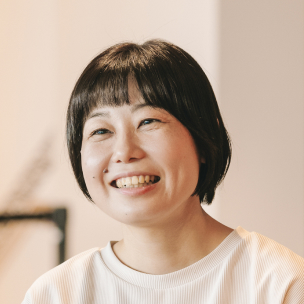
Haruka Kawaguchi
Leader, Project Management Team, Service Planning Department, Merchant Strategy Division, Business Operations Group
She led the entire project by coordinating with internal stakeholders, defining business requirements, designing mechanisms, and formulating risk mitigation policies and foundational operation rules for the release.

Takaya Iwashita
Leader, Service Planning 2 Team, Service Planning Department, Merchant Strategy Division, Business Operations Group
Leveraging his past marketing experience, he was engaged in service planning and considering market deployment methods from the user’s perspective, with future service growth in mind.

Fumitake Kashiwa
Project Management Team, Service Planning Department, Merchant Strategy Division, Business Operations Group
He was responsible for coordinating and managing the mini app for the funds collection service provided in the PayPay app.

Hiroe Isono
Business Operations 2 Team, Business Operations Department, Merchant Business Strategy Division, Business Operations Group
She focused on organizing requirements and progress management of business accounts, the infrastructure used in this project, and overseeing the pre-release acceptance testing.

Yuki Fujihira
Service Planning 2 Team, Service Planning Department, Merchant Strategy Division, Business Operations Group
Since joining the company, she have been involved in planning this project and managing the donation feature.
Enabling Donations and Offerings on PayPay
Could you explain the donation feature added in PayPay and tell us what business accounts are?
Haruka:
This feature allows users to make donations, offerings, gifts, and what have you through PayPay, though they are traditionally done through cash or bank transfers. The process remains unchanged from standard PayPay transactions. For offerings, users scan the code at shrines or temples to send funds, and for donations, which is only available online, users select PayPay as the payment method on the website through which they want to donate. Both features only use PayPay Money.
Fundraising organizations can receive the donations by creating a business account with PayPay, which is an account for corporations, something like a corporate account available with a bank. Registering for a business account, which is separate from an ordinary merchant account, enables organization to receive donations.
What were the challenges when implementing the donation feature?
Haruka:
When it comes to donations in Japan, it is significantly lagging in introducing cashless solutions. Unlike payments for goods and services, the legitimacy of donation amounts is often unclear, necessitating countermeasures to minimize risks of money laundering and fraud. A robust risk mitigation strategy and review system are a must, and legally speaking, “payments” and “transfers (including donations)” are entirely different matters. That’s why few businesses have addressed cashless donation solutions.
Nevertheless, major donation organizations expressed strong demand, citing concerns for several years that donations and offerings haven’t kept up with the trend of going cashless. Collecting cash from donation boxes and manually counting coins were significant pain points.
Takaya:
Since PayPay’s inception, I have heard people say how it would be nice if PayPay could be used for donations and such. While having the desire to realize such user-centric services, we needed to overcome challenges and consider how to make it viable as a business. This sparked internal discussions.

Delivering a User Experience Better than Cash Despite Different Mechanisms
In hindsight, how do you think the project went?
Haruka:
Initially, beginning development was particularly challenging. Although the concept of a business account was grand, building new business schemes demanded substantial development bandwidth, which led us to a year of repeated entries and rejections in quarterly development roadmaps. We were required to consolidate core requirements involving relevant departments for each entry. Each time we got rejected, we had to request other departments to revisit the framework, and when the green light was ultimately given, the other teams repeatedly checked with us whether we were actually starting development this time.
Hiroe:
Once we were given the go-ahead, we first had to decide on the business requirements. Due to legal restrictions, it was necessary to develop a separate management system from the current PayPay payment and merchant management system. We requested help from departments like service operations, financial crime prevention, sales, and customer support, hosting 2-3 meetings a week with around a total of ten people gathered from various departments to define the business account system and rules.
Yuki:
I joined the project midway. I actually proposed a new service idea, in which users could donate PayPay Points, during my job interview. Although I was delighted to work on a service I envisioned after joining, I realized that we needed to create new frameworks for legal compliance and for risk management reasons. Frankly, I assumed that all we had to do was integrate a donation feature into the existing system. It just so happened that the responsibility involved in this project was heftier than anticipated! Nevertheless, I focused on providing an enjoyable experience to users, especially since this service could transform the behavior of Japanese people making offerings, traditionally given as cash. I explored through surveys and interviews where the users’ demand might be and how we can make this service loved by many people.

What was particularly difficult?
Hiroe:
Donations and offerings are governed under different laws and rules than payments, which made prior knowledge from payment services often pointless. There were numerous issues that we alone could not make decisions on, necessitating cross-functional collaboration. So, we gained insights from multiple departments to keep solving issues and adjusting requirements accordingly.
Takaya:
Meanwhile, the complexities arising from dealing with a different system are an internal matter to PayPay. From the user’s standpoint, any difference in the donation flow from the payment experience could come across as “inconvenient.” Hence, we ensured that users got the same experience as payments. For instance, rather than publicizing the donation feature as PayPay’s new service, we branded it as a new feature, wording the landing page and service name to match that image. These seemingly minor distinctions profoundly affect user perceptions, so we deliberated on how we could give the best impression through a user-centric lens.
Yuki:
Unlike donations, discussions arose even internally about whether offerings at shrines and temples should indeed go cashless. So, while mindful of unifying user experiences with PayPay’s payments, I made it a point to create a UI/UX that honors Japanese traditions and that would be liked by users. Consequently, the donation process was made the same as that of PayPay payments, with an added animation that evokes the traditional offering process of dropping coins into collection boxes. While maintaining the fun of providing cash offerings, I’d like as many Japanese users as possible to experience cashless offerings for the first time.
Fumitake:
Managing and developing a mini app that enables donations and offerings was challenging because the number and amount of offerings surge in a very particular time. That meant that our rollout deadline was a hard deadline. We adjusted user experiences to be consistent with the existing features while meticulously managing our schedule down to the hour, which led to a successful release. Every PayPay member is a professional, reliable, and are punctual, so thanks to all people involved, we successfully were able to roll out when user demand was starting to pick up. Overall, the service delivered a promising start.

Aiming for a Future Where Donations and Offerings Are Given via PayPay
What do you value in work?
Haruka:
Out of the PayPay 5 senses that is upheld by the entire PayPay Group, I emphasize “Work for life, or work for rice – What is your real purpose? -” and “Ego is not welcome, Communication is necessary.” By entirely focusing on addressing the needs of donation organizations grappling with their delayed adoption of cashless solutions and providing additional value, I maintained close communication and achieved all stakeholders to be in sync.
Takaya:
For me, it’s “Speed is our bet on the market.” PayPay’s rapid growth owes to swift decision-making and actions once we decide to do something. While it is crucial to deeply contemplates, keeping a “let’s try it out” mindset makes my daily tasks more interesting.
Fumitake:
“Be sincere to be professional.” Everyone involved thought hard on identifying optimal solutions for unprecedented services like this and shouldered immense responsibilities to resolve numerous challenges. That allowed us to successfully release the business account feature.
Hiroe:
I also like “Ego is not welcome, Communication is necessary.” I think the success of our project owes to the diverse blend of backgrounds at PayPay, which helped us see things from various perspectives, which enhanced the service and helped us strike the perfect balance between safety and convenience.
Yuki:
I also uphold “Ego is not welcome,” like Hiroe-san. Despite having to tackle challenging issues, I kept up a positive mindset and a consistent one-team approach. I also believe everyone took ownership of their roles and earnestly addressed user and service needs.
Could you tell us about your future aspirations or missions?
Haruka:
If we can offer a solution which allows for donations and offerings even when you don’t have cash, I think that could encourage more people to make donations. Although Japan has different social and cultural expectations from other countries, I hope to vitalize donations in Japan through this project.

Yuki:
By making offerings and whatnot cashless and providing a new experience to users, I also want to help religious institutions reduce their time and effort spent on managing cash, because this would help increase the time they can interact with worshippers. We’ll continue polishing the service to make cashless offerings and donations penetrate in society.
Fumitake:
We’re contemplating new services utilizing business accounts. Just as PayPay achieved growth by valuing user demand, we will continue to launch user-centric products and services.
Hiroe:
PayPay is already integral to Japan’s infrastructure. Rather than just launching new, attention-grabbing services, I want to expand services highly involved in our daily lives, where users suddenly one day realize, “Oh, we can do this with PayPay.” To that end, I’d like to further enhance the business account service.
Lastly, a message to the readers please!
Takaya:
If you look at the number of users and merchants, PayPay may be a top-tier service, but the company is still just over six years old. Like the still-developing business account, numerous areas remain undeveloped and are waiting to be refined. Depending on your work, you could alter the values and behavior of both society and users, and be the first one to observe that change.
Fumitake:
The people who create PayPay’s services are experts from diverse fields who take ownership of providing a payment infrastructure and who have created brand new services and features to improve user experience. If you have solid skills, are serious about your work but also flexible, you can thrive at PayPay.
Yuki:
Individuals with a pioneering spirit and adaptability are well-suited for PayPay. Additionally, as the PayPay app comes in contact with numerous domains, those who stay abreast of everything in society and address any issues as a personal matter would enjoy working here.
Click here for Hiring Information!
Business level Japanese is required for all the following positions below.
*Job openings and employee affiliations are current as of the time of the interview.