



The Project Story series takes readers behind the scenes of PayPay’s large-scale initiatives.
In this edition, we look at the company’s push into international expansion. PayPay’s global journey is a challenge into largely undefined territory: taking the same convenience users enjoy in Japan and making it work across borders. As a first step, in September 2025 PayPay launched Overseas Payment Mode, enabling users to pay in Korea with the same experience they have in Japan. This is not a simple overseas rollout. It is an ambitious attempt to rebuild everything that sits underneath cross-border payments—law, financial regulation, telecom, and UX. We spoke with four members of the Finance Strategy Division’s International Team who led this unprecedented effort: what barriers they faced, and what exactly they created.

Ryo Kanno
Leader, International Team, Finance Business Strategy Department, Finance Business Strategy Division, Finance Business Group
He joined SoftBank in 2007 and PayPay in 2023 after working in network operations and supporting portfolio companies. He now oversees PayPay’s international business, leading both the vision and execution of global expansion. His creed is “move first, refine as you go,” turning projects with no precedent into reality.

Yasushi Tanaka
International Team, Finance Business Strategy Department, Finance Business Strategy Division, Finance Business Group
He started his career as a developer at a system integrator and joined SoftBank in 2014, where he worked on telecom and settlement system design. He moved to PayPay in 2024. After building schemes for merchants, he now designs business requirements and settlement flows for outbound services, taking on the challenge of balancing security and UX. His guiding belief: “Use technology to move the world forward.”

Yuka Koshio
International Team, Finance Business Strategy Department, Finance Business Strategy Division, Finance Business Group
She joined Start Today (now ZOZO) in 2015, working in corporate sales in Taiwan before joining PayPay in 2022. She now handles contracts and user terms in the International Team. Not a legal professional by training, she leverages her sales experience to drive complex cross-border projects. Her driving force is “learning while moving in completely new territory.”

Celina Yoojin
International Team, Finance Business Strategy Department, Finance Business Strategy Division, Finance Business Group
She built her career in finance and marketing across Singapore, Korea, and Japan before joining PayPay in 2022. In this project, she led marketing and promotion, including securing an MOU with the Korea Tourism Organization. With a mission to take a Japanese-born service global, she works at the intersection of culture, language, and strategy.
The Beginning of the Challenge — A Vision That Redefines the Norm
Kanno:
PayPay’s move into global markets began with a clear purpose: to bring the seamless cashless experience we have cultivated in Japan to users across borders, cultures, and regions. It is an effort to evolve our “Fun to Pay” philosophy into a universally shared experience. The International Team’s traditional mission is to connect overseas mobile wallets to PayPay merchants in Japan, creating an environment where users from various countries can make payments anywhere in Japan. We manage daily operations that enable services such as Alipay and Kakao Pay to function smoothly at PayPay merchants.
However, this project required us to take the opposite approach. Instead of connecting foreign wallets to Japan, we set out to build a system that enables Japanese users to make payments at overseas QR merchants using the same PayPay app they rely on at home. In essence, it was an attempt to export the domestic UX as-is to markets abroad. Unlike conventional cross-border payment models, this initiative required us to complete transactions without transferring any user data outside Japan. This meant designing a product that could absorb differences in exchange rates, communication environments, and data flows between countries. To meet these unique requirements, the International Team developed a new payment flow that does not rely on user IDs, and designed a consistent user journey that enables users to operate the app exactly as they do in Japan. As a result, users can now enjoy a fully unified experience overseas, including the ability to top up their balance while in Korea, price displays converted into yen, and real-time confirmation of PayPay points. This project is not merely about making PayPay available in Korea. Its true value lies in establishing a seamless and unified user experience that transcends borders.
As the project lead, I prioritized forward momentum over perfect preparation. By visualizing risks, sharing them openly within the team, and maintaining speed as our highest priority, we were able to drive the project forward.
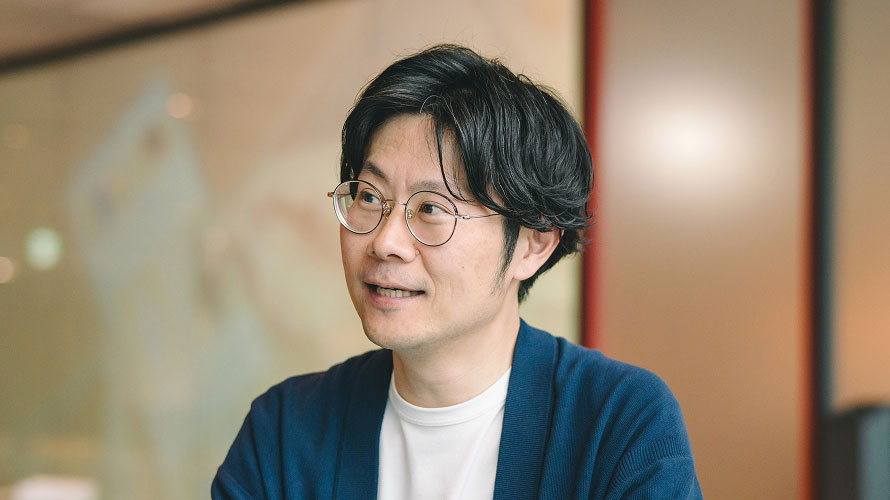
Tanaka:
Until now, I mainly worked on building schemes for merchants. This time, the challenge was to reconstruct the user experience itself for a global context. It was a scale unlike anything I had tackled before.
Koshio:
I come from a sales background, not legal. Right after joining the International Team, I was assigned responsibility for contracts and terms—essentially being thrown into an entirely unfamiliar domain. But because I wasn’t bound by established legal assumptions, I could move flexibly and convert my experience into momentum for an international project.
Yoojin:
I had worked in IR and alliance roles before this. When I learned that Korea would be the first expansion country, I felt I could really contribute by leveraging my language and cultural background. I was deeply curious about what kinds of negotiations would unfold in a market with different rules and norms.
Crossing Invisible Barriers — Redefining Technology and Regulation
Kanno:
The first major challenge we faced was Japan’s strict regulations on cross-border transfer of personal data. To enable payments abroad without sending user information outside Japan, we had to revisit the foundation of our system design. As the project lead, I made a deliberate decision: we wouldn’t pause just because risks existed. Instead, we would manage those risks in a controlled way and keep moving. We held extensive discussions, but always aligned around the idea that our stance should be to move the project forward.
Tanaka:
To give users the same experience overseas as in Japan, the new system needed to support both user-presented (CPM) and merchant-presented (MPM) QR payment flows used by international merchants. This required absorbing differences in exchange rates, communication stability, and even the timing gaps in transaction processing.
Our goal was straightforward in words yet extremely challenging in practice: to deliver a payment experience that feels reliable and consistent, regardless of country or infrastructure. At first, some said the idea might be technically impossible. But I believed that if we decomposed the problem deeply enough, a solution path would emerge. We dismantled the architecture, rebuilt the data flows from scratch, and eventually designed a payment mechanism that does not rely on user IDs at all. And across borders, security is non-negotiable. We engineered the system assuming the unexpected would happen—encryption of all communication, strict access control, anomaly detection, and layered fallback logic. Balancing speed and safety simultaneously became the core philosophy behind our engineering design.
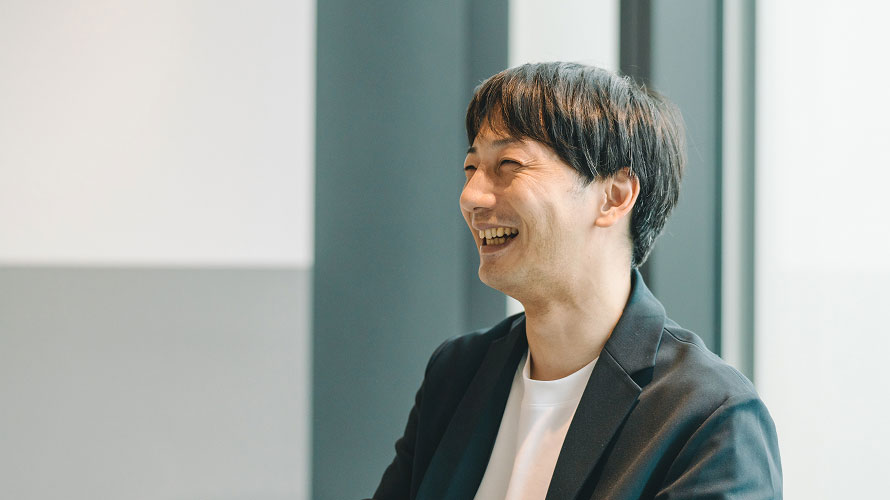
Kanno:
Another big wall was how to judge the user’s “country” in a compliant way. What should we base it on? One wrong definition could affect both financial risk and UX. We kept discussing and iterating until we found an optimal balance between risk and convenience. The initial numbers after launch aren’t yet where we ultimately aim to be. But the fact that we were able to prove that PayPay works overseas—that alone carries huge significance. The learnings here will directly inform and accelerate our future expansions.
Koshio:
The wording of contracts and user terms becomes uniquely challenging in international projects. We needed to comply with Japanese laws—such as the Payment Services Act, personal data protection rules, and foreign exchange regulations—while also adhering to local regulations overseas. Naturally, requirements grew more complex. But that’s exactly why I felt my role was to keep asking, “How can we make this work?” rather than “Why is this difficult?” In cross-border contracts, a single phrase can change the entire scope of responsibility. With an interpreter, I worked with overseas legal teams line by line, aligning on intent and interpretation. It was a negotiation without obvious “right answers,” and the work became one of building trust through language and precision. I carried the weight of that responsibility—but I also used every bit of coordination skill I had developed from my sales background.
Tanaka:
Another unforgettable part was that we ourselves initiated and steered negotiations with our overseas partners. After diving deep into Alipay+ specifications, we proposed a way to operate the system without sending specific data—a deviation from the norm. In the end, they adjusted their operations to accommodate our approach. Even when working with a global player, we weren’t in a passive position. We were in a position to co-create the rules. In the field, avoiding risk alone doesn’t move a project forward. We had to maintain speed while preserving safety. Living in that tension—every day—is what defined the development phase of this project.
Kanno:
What stood out to me throughout this project is that our team never feared challenges without precedent. Regardless of role or expertise, each member was willing to make decisions and act. That collective mindset became the engine that pushed us through walls we had never encountered before.
On the Ground — When Innovation Takes Shape
Yoojin:
Our promotion strategy in Korea ended up taking a very different shape from what we initially envisioned. We first considered running individual campaigns with popular merchants, but under a scheme jointly operated with Alipay+, there were naturally areas where we couldn’t act independently. That’s why we shifted our mindset to: How can we combine the resources we do have to create the greatest possible impact? It became less about constraints and more about finding the smartest moves within the framework.
This led us to sign an MOU with the Korea Tourism Organization and pivot toward a strategy that leveraged local resources. Using channels like airports, trains, and tourism booths, we built touchpoints so that users arriving in Korea would naturally notice that “PayPay works here too.” During negotiations, I repeatedly felt the differences in culture and values—decision-making speed, how meetings are run, even the nuance behind expressions. In conversations with partners, people with different backgrounds and incentives slowly found a shared objective. I realized that real collaboration starts only when you first make the effort to understand the other side, rather than trying to change them.

Kanno:
The decision Yoojin-san made there was a turning point for the project. She treated constraints not as blockers, but as inputs to expand the space of possible solutions. That mindset earned the trust of our partners on the ground.
Yoojin:
In Korea, WOWPASS, a popular top-up card, was already deeply established. To deliver something new in such an environment, we needed to articulate the unique value only PayPay could offer .Our answer was simple: no top-ups, and instant payments through the app you already use. I focused all our messaging on communicating that clarity.
On a business trip, I still remember the moment I first saw PayPay acceptance sticker with the logo on the street. Seeing that red “P” lined up with other wallets’ logos—it was a moment when I felt the mechanism born in Japan was now breathing abroad. After the launch, social media posts like “I just used PayPay in Korea!” started appearing more frequently. Local store staff also shared that payments became smoother and Japanese customers increased. More than the numbers, the most important outcome was this: we started to see real changes in people’s experiences. I also recall users telling us, “This feels safer and easier than using a credit card.” With Overseas Payment Mode, they can see local currency converted into yen and confirm points on the spot. Removing the stress of paying while traveling—that felt like the essence of PayPay’s value.
A Culture That Moves Before Perfecting
Kanno:
In the International Team, we don’t wait for perfection before we act. We move first. We hold daily stand-up sessions to share issues and resolve them quickly. That rhythm has become part of our culture. People come from very different backgrounds, but under a shared purpose, they accelerate decision-making together.

Tanaka:
For this project, the number of stakeholders and the variety of issues were enormous. Even so, we managed to maintain a high speed of decision-making. The reason is simple: we don’t have meetings just for the sake of talking. Every discussion is designed to move the project forward.
Koshio:
As someone who isn’t a legal specialist, my first experience in international contract negotiations was nerve-wracking. With an interpreter and an overseas legal team, we would go through every sentence together, aligning on the exact meaning. The difficulty of bridging differences in interpretation behind the words really hit me. But more than fear, I strongly felt, “I cannot be the one who makes this stop here.” Leaning on my sales background and experience in negotiation, I think I was able to gain a new kind of driving force—one that let me push an unfamiliar domain forward.
Yoojin:
Our team is diverse in nationality and career background, but the axis of discussion is always the same: “Is this really better for users?” The intersection of speed and diversity—that, to me, is what makes this a very “PayPay-like” environment.
Towards Borderless Financial Experiences — Individual Challenges Ahead
Kanno:
Based on what we’ve learned in Korea, we’re now preparing to take on broader markets, starting from Asia. The cashless economy continues to expand year by year. We’re entering a phase where our focus is turning the UX we’ve built in Japan into a global standard. Can QR codes become a kind of universal language for payments? Answering that question is our next responsibility.
Tanaka:
Every country has its own payment frameworks and constraints, and there are still countless challenges ahead. But that’s exactly why it’s worth doing. I want to keep designing systems that move the “common sense” of payments one step forward.
Koshio:
In international business, regulations and systems are constantly changing. So instead of being on the side that simply reacts to those changes, I want to stand on the side that helps define the rules. That’s my next goal.
Yoojin:
In marketing and promotion, there is no single right answer across countries. I want to keep working on how we can root “PayPay-ness” in different cultures and languages around the world. The process itself is the challenge.

Kanno:
Through this project, the company itself has started to change. We make decisions faster when we step into uncharted areas; collaboration between teams has become even stronger. The experience of having “moved something that once seemed impossible” has become a force pushing us toward the next challenge.
Innovation as a Daily Practice
Kanno:
In PayPay’s international business, we sit at the same table as global players—companies, institutions, regulators—and keep discussing, negotiating, and reaching alignment, across differences in systems, cultures, and languages. We’re constantly exploring what the next form of financial infrastructure should be. What we face every day is change itself. Every discussion, every system design, every negotiation exists to move the precedent. Each time we move it, a new structure is etched into society. What the International Team has created is not just an “overseas feature.” It represents a step toward a new standard in global finance. PayPay’s international business is, in every sense, a frontline of innovation. On that front, the next “obvious” thing in the world is already starting to take shape. And the fact that this innovation is part of our everyday work—that’s what makes this team so fascinating.
A Message to Future Colleagues
Kanno:
At PayPay’s Finance Strategy Division, you don’t just propose ideas—you drive them all the way to implementation, at speed. You don’t need prior international experience. If you have the will to take on challenges, you can stand at the center of innovation here.
Tanaka:
PayPay’s products are always in a cycle of experimentation and evolution. For those who want to sharpen their design and engineering skills on a global stage, this is an incredibly stimulating environment.
Koshio:
This is a place where you can turn your own experience—whatever it is—into a key piece of international business, instead of being confined by your initial area of expertise. If you’re someone who keeps asking “How can we make this possible?”, I don’t think you’ll find a better environment.
Yoojin:
There are very few places where you can help grow a brand across countries and cultures from this close. If you have the will to take on the world, I’d love for you to come and run alongside us.

*Affiliations and titles are as of the time of the interview.
