


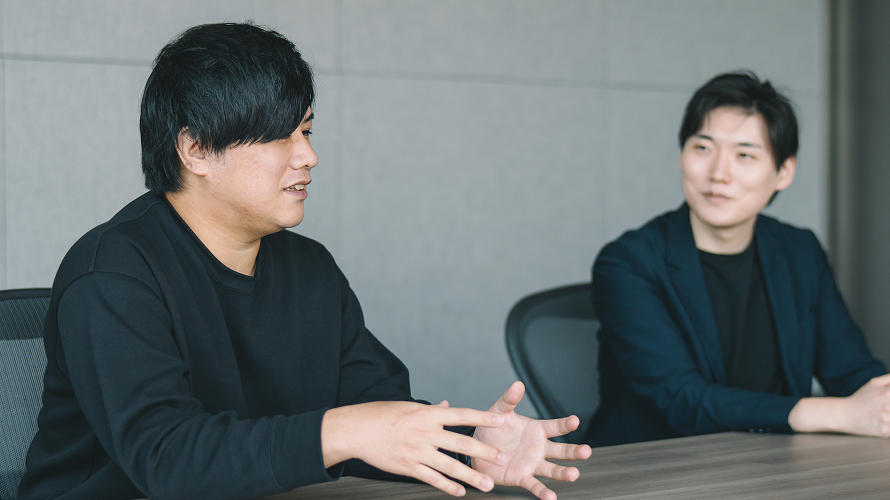
As part of the Professionals series, which highlights outstanding talent across the PayPay Group, this article features Junichi Nagayama and Kengo Harada from PayPay Securities’ Business Promotion Division. Through their career journeys, perspectives on work, and firsthand experiences, a clearer picture emerges of what it means to drive business forward in an evolving environment. Working on unprecedented projects in an unfinished business setting has provided them with practical insights into how “value creation capabilities” are developed. In this article, we explore the mindset and skills required for business development.

Junichi Nagayama
Division Head, Business Promotion Division, PayPay Securities
After graduating, he joined a bank-affiliated credit card company, where he was engaged in service planning. He later worked at LINE Corporation, focusing on financial business development for enterprise clients. In March 2020, he joined SoftBank Corp., where he led new business development in the fintech domain and was involved in the launch of PayPay Securities. He has been in his current role since October 2023.
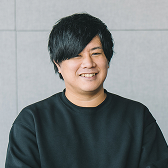
Kengo Harada
Business Promotion Division, PayPay Securities
He has been engaged in business planning and business development across HR and IT companies. He joined SoftBank Corp. in November 2021, where he worked on PMI (Post-Merger Integration) for FinTech investments and alliance planning. In August 2022, he was seconded to PayPay Securities and later transferred permanently in July 2025.
Careers Built Through Unexpected Turns
Nagayama:
I made a career move with the intention of becoming a professional across a wide range of financial domains, including cards, banking, insurance, and securities. However, I have never been the type to map out a clear vision of “what I want to become.” Looking back, I feel that I arrived at my current role by consistently responding to what was asked of me at each stage. A turning point came when PayPay Securities launched its integrated service, the “PayPay Securities Mini App,” and began to take on a central role in the securities domain within the PayPay Group.
By combining PayPay’s overwhelming user base with the securities business, I saw the potential to create entirely new financial services. What strongly attracted me was not only that potential, but also the flexibility to build systems from the ground up. At the time, I was not particularly focused on the securities field. However, PayPay Securities differs from traditional securities companies in that it develops its systems in-house. This provides a significant advantage from a business perspective, and it made me feel that there was room to do something truly interesting in this environment. That is what ultimately led me to commit to PayPay Securities.

Harada:
I have been involved in driving new business initiatives across various industries, including HR, IT, and finance. While each field requires different knowledge and approaches, I believe the underlying mindset remains the same regardless of the industry. Looking back, I feel that I arrived at PayPay Securities by consistently approaching the work in front of me with sincerity. The reason I was drawn to the company was precisely because it was still “unfinished.” Despite having access to PayPay’s vast user base, the business itself is still in development. In other words, there is room to design the direction and define what success looks like on our own. Rather than simply executing predefined tasks, this is an environment where we identify what needs to be done, define it, and move things forward ourselves. That way of working strongly aligned with my own mindset.
Business Development as Value Creation
Nagayama:
Business development is, at its core, about creating new businesses. It is not about extending existing services, but about shaping value that does not yet exist. To do that, we repeatedly make decisions while involving stakeholders both inside and outside the organization. In my role, I stand at the intersection of business, product, and management, and continuously ask three questions: what should we do, how can we make it happen, and does it truly create value for users? Most of the projects we deal with are things we have never experienced before. Even so, the most important thing is to stay grounded in a user-first perspective. That mindset serves as the foundation for every decision we make.
Harada:
Our role is to take strategy and carry it all the way through to execution, doing whatever is necessary to bring new value into the market. In reality, that often means stepping into areas where ownership is unclear, or going through processes that may seem inefficient at first glance. But whether or not you are willing to go through those steps has a significant impact on the outcome of a project. Rather than relying on perfectly defined roles, we place importance on taking initiative ourselves, filling in the gaps, and moving things forward. It is an environment where those actions are expected, regardless of tenure or title.
Where Scale Meets an Unfinished Business
Nagayama:
One of the defining characteristics of PayPay Securities is the coexistence of scale and an unfinished business. As of March 2026, the PayPay platform has over 73 million users. At the same time, the securities business is still in a developmental stage. This means we operate in an environment where we can design from scratch while having the potential to create significant impact. Because of this, our decisions directly shape the direction of the business and, ultimately, influence society in a meaningful way.
Harada:
Because the business is still evolving, there are always multiple paths to consider. We are not limited to extending what already exists. In many cases, we can rethink the very foundation of the business itself. The fact that our decisions are directly reflected in the service, combined with the process of moving forward through trial and error, is what defines the essence of this role.
Taking on the “Impossible” — The IPO Project
Nagayama:
The project to handle IPO listings of U.S.-listed companies for Japanese individual investors began with a simple question: why shouldn’t we be able to offer this through our own platform? In reality, however, it was far from simple. Because the companies were listed in the U.S., the project involved navigating regulatory constraints and building systems without precedent. There were many voices questioning whether it was truly feasible. Still, I never saw our role as listing reasons why something could not be done. Instead, it was about figuring out how to make it possible.
Given the nature of IPOs, delays were not an option, and failure was unacceptable. As new challenges kept emerging, teams across the organization came together, working closely to find solutions. Through that process, we were able to develop approaches that went beyond conventional thinking.

Harada:
I was involved in the project while taking on multiple roles, but what I found most challenging was managing the overall progress as a PMO. There were close to 1,000 tasks leading up to the launch, and for each one, we built contingency plans to prepare for unexpected situations. We set a high bar by deciding that we would make this happen, and then worked to ensure that it did not remain just an ideal. By translating that ambition into practical, executable systems, we were able to move the project forward. I believe that accumulation of effort ultimately led to its success.
A Mindset That Refuses to Say “Impossible”
Nagayama:
One principle I value deeply is not saying that something is impossible. The absence of precedent is not a valid reason to stop. If something creates value for users, then our role is to keep thinking about how it can be realized. That, to me, is what the job is about.
Harada:
For me, the most important thing is making things happen. No matter how strong an idea is, it only gains meaning when it is delivered to the market. That is why I stay committed until the very end, even if the process is not always straightforward. There is real value in seeing something through to completion.
Expanding Careers in an Unfinished Environment
Nagayama:
What makes this work particularly interesting is how quickly your perspective expands. By engaging with a wide range of stakeholders, including industry leaders and specialists, you are constantly exposed to new viewpoints. At the same time, the fact that our decisions directly impact society creates a level of dynamism that is hard to experience elsewhere.
Harada:
For me, one of the most rewarding aspects is being able to point to work and say, “this is what I contributed.” Projects like the IPO initiative produce visible outcomes, and we can feel the response from users in real time. That brings both a strong sense of responsibility and a deep sense of fulfillment. Because the business is still evolving, our decisions are directly reflected in the service. That sense of ownership is what makes this role so compelling.

Nagayama:
This is an environment for people who can embrace uncertainty and take initiative. There is still a great deal to be done, but for those who are motivated to step forward, create value, and engage with change rather than avoid it, it offers a highly rewarding experience.
Harada:
In reality, this job is a continuous process of building from scratch. For those who can enjoy uncertainty and stay committed until the end, PayPay Securities provides an environment where you can truly expand your potential.
Job openings related to this article

*Job openings and employee affiliations are current as of the time of the interview.