


This installment of our Professionals series shines a spotlight on the exceptional talent driving PayPay Group forward. This time, we sat down with a key player from PayPay’s Finance Business Strategy Division, responsible for planning and driving strategic alliances with global corporations. We took a deep dive into the rewards of her work, her most recent project—the Google integration—and the core values she upholds in her professional life.
Mai Takeshita
Leader of Alliance Team, Finance Business Strategy Department, Finance Business Strategy Division, Finance Business Group
Originally from Singapore. After earning her degree in Economics from Nagoya University’s G30 Program, she joined SoftBank. There, she was engaged in forging alliances and establishing joint ventures with leading overseas companies, including portfolio companies of the SoftBank Vision Fund. She joined PayPay in 2022, where she has been involved in the planning and execution of new business launches. She has been in her current role since May 2025.
A Strong Desire to Drive Business Firsthand Sparked the Career Move
Could you tell us about your career path and what led you to join PayPay?
In my previous role, I was primarily engaged in research, conducting corporate analysis and making proposals for potential investments. After four years of analytical work, my desire to create more direct output intensified. This led to my secondment from SoftBank to PayPay in 2022, and I officially transferred the following year.
Since joining PayPay, I’ve been involved in researching both domestic and international companies, and then using those findings to formulate and implement product plans. I also spearheaded the renewal of the wallet function (see our past article). Beyond the product and service releases themselves, I find great fulfillment in the process of driving these projects forward and am deeply engaged in my work.

Could you tell us about your current responsibilities and mission?
The mission of the Financial Strategy Department is to leverage PayPay’s robust user base to make financial services more accessible and familiar to everyone. We constantly monitor success stories both in Japan and globally, aiming to plan and develop business initiatives that make the financial experience “simple and secure.”
Within the department, our alliance team drives the planning and realization of new user experiences through partnerships with global corporations. The integration with Google Pay Accounts, which we launched in May 2025, is a prime example of our efforts.
From a Visit to Google’s Headquarters to a Realized Alliance
Could you tell us about the recent project you managed with Google?
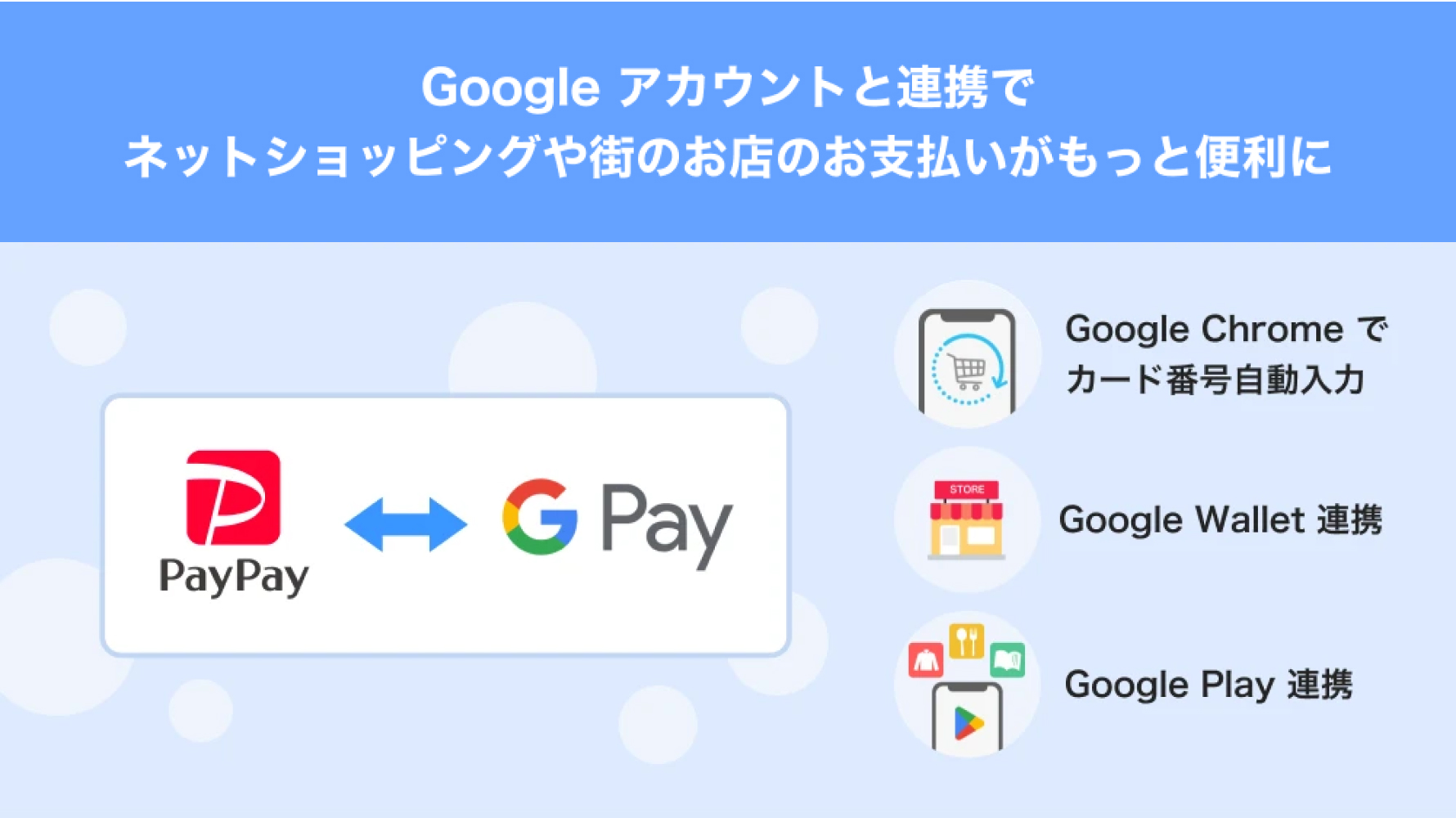
The Google Account integration allows users on both iPhone and Android to link their “PayPay” and Google Pay account information. This enables them to register “PayPay,” “PayPay Card,” and “PayPay Balance Card” as payment methods across various Google services, making payments more convenient.
This project actually began about two years ago during a business trip to the US, where I brought the proposal to Google. After securing an agreement between the leadership of both companies, it took a year and a half to bring it to fruition. I served as the business-side lead, driving the project forward in collaboration with my counterpart at Google Japan. For both companies, this was the first attempt at an account linkage with an external, non-group corporation. With no precedents to follow, we had to build everything from scratch, coordinating with various departments every step of the way. There was no established roadmap or easy answer. I was tasked with devising solutions and strategies on my own, securing buy-in from management, and pushing the project ahead. It was a continuous series of daily challenges.
Now that it has been released, how do you feel?
First and foremost, I’m relieved that we were able to launch it successfully and that the user feedback has been positive. Of course, the launch isn’t the end; it’s really just the beginning.

I believe the biggest key to the project’s success was that both sides firmly believed in the possibilities and were able to share a common vision between PayPay and Google. This wasn’t just about linking payment methods; we were able to collaborate toward the shared goal of enhancing the user experience. The project was propelled by this mutual alignment of our perspectives.
Furthermore, in this project—where we guided everything from concept creation, planning, and development to implementation through close discussions—we spent a particularly long eight months engaged in complex debates over the product design.
We held numerous workshops with stakeholders in Japan and overseas to meticulously examine the necessary data and architectural components. Since much of the communication, both internal and external, was primarily in English, I was careful to ensure there were no misunderstandings or discrepancies in our communications. The road to finalizing the contract was also long, and negotiations regarding the contract terms were difficult as the non-negotiable stances of both companies became clear.
With the signing deadline looming, I was scrambling to keep things moving, holding negotiations that included our executives and gathering user feedback (laughs). Under that pressure, the cooperation from our legal team and other related departments was an immense help. When we hit a roadblock, the product and business departments worked in close concert, supporting each other and collaborating to find solutions from various angles. It was a huge advantage that everyone I consulted with was positive and worked together with me toward a resolution. This project simply would not have been possible without such a cooperative environment, both inside and outside the company.
Although the release is complete, I feel there are still challenges remaining, particularly around clarity and ease of understanding. For this Google integration, we anticipated that users might have questions about what linking their accounts actually enables, so we prepared meticulously. We created guide pages and explanation pages and, with the help of marketing and other departments, devised ways to ensure users could understand the process smoothly. Regarding data linkage, we’ve made efforts to clearly indicate the types of data being shared on consent screens and elsewhere, but I still feel there is room for improvement. Moving forward, I believe it’s crucial to continue making improvements by gathering and analyzing user feedback to provide more intuitive and easy-to-understand information.

What aspects of this project made you feel you had grown professionally?
The most fulfilling part was being able to sign the contract within the given deadline. It was the moment when, after all the internal and external negotiations, the path to bringing the project to life became clear. Without agreement from both companies, and from the business side, the project could have been derailed. Being able to successfully conclude the negotiations with a sense of urgency to deliver to our users as quickly as possible—that was a major achievement for me personally. This project truly reaffirmed for me the importance of leveraging the expertise of professionals in various fields when faced with challenges I couldn’t solve on my own.
At PayPay, there is an environment where many people are eager to cooperate positively to solve problems. Tackling challenges while listening to the opinions of various professionals ultimately adds to my own knowledge and contributes to my personal growth.
The Appeal and Potential of Alliances at PayPay
What is the atmosphere like in your team?
The team consists of several members. We have collaborative projects with our multinational product team, so there are frequent opportunities to use English both internally and externally. Internally, English communication is a daily occurrence, and we work in a very friendly and open atmosphere. It’s an attractive environment, free and dynamic, much like the international school I once attended. I think there are very few companies where you can work in an environment like this.

What was the specific mindset you focused on while advancing the project?
For the Google Account integration, the phrase “Believe in our product & Team” truly captures it. I always believed in our product and our team, and we pushed forward with the goal of becoming the world’s number one fintech company.
Additionally, this project would not have been possible without the incredible support from our product team and other departments. I always have the conviction that with the PayPay team, we can achieve anything. Looking ahead, I want to continue building new services and alliances to deliver the world’s best financial services to our users.
What do you find appealing about working in alliances?
The appeal of alliance work lies in creating new value through external collaboration and the high degree of freedom to be involved in the entire process—from planning and execution to tracking results. On the other hand, unprecedented proposals are often questioned on their necessity, so the challenge becomes how to steer everyone towards a “yes.” However, it’s a field where you can feel a tremendous sense of reward by having a strong will, exploring feasibility from multiple perspectives, and bringing ideas to fruition.
Through this project, and leveraging my past experiences, I feel I’ve established my area of expertise in working with Google. My research skills and subsequent execution capabilities are indispensable in alliance operations, and I was able to hone my ability to see things through as the primary person in charge.
What are your future goals and vision?
The integration I’ve discussed is just the first step for us. Moving forward, we aim to continue developing and implementing a wide range of attractive initiatives through alliances that benefit both our partners and PayPay users. Furthermore, by leveraging PayPay’s strengths, I want to bring to life Japan-first and world-first initiatives.

Finally, do you have a message for our readers?
PayPay is a hub for true professionals. Those who can thrive here are people who constantly think about how to provide and improve products for our users, how to become number one in Japan and globally, and who can always work with a sense of ownership. Also, we take on many new initiatives, so team members who can search for ways to get things done, rather than thinking of reasons why they can’t, are the ones who will excel.

*Job openings and employee affiliations are current as of the time of the interview.