


In our Tech Talks series, we bring you direct insights into our philosophy on product creation and our team’s atmosphere through the voices of our diverse product members from around 50 countries and regions. This installment features Abhishek Jain, a Tech Lead at PayPay Card, who shared details about his development work and the personal growth he experienced through his projects.
Abhishek Jain
Tech Lead, PayPay Card
I'm Abhishek from India. After gaining experience as an engineer and later as a tech lead at a major Indian EdTech company, I came to Japan and joined PayPay. Subsequently, I was seconded to PayPay Card, where I am now responsible for the construction and development of the payment processing system.
Integrating Legacy Systems to Build a Post-Authorization Processor
What is your current role?
I serve as the Tech Lead for the Payment Processing Team within the Payment Product Division at PayPay Card. My responsibilities include system design and coding to ensure the secure and smooth handling of various tasks centered around authorization (referred to as “auth” hereafter), which signifies the approval of a credit card transaction.
Can you tell us about a recent project that left an impression on you?
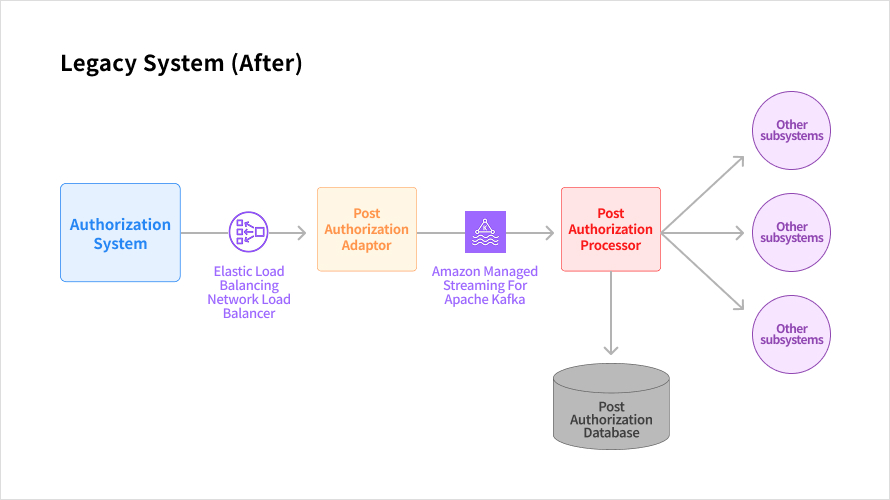
The design and development of a post-authorization processor that connects to the authorization system. To give you some context, when a credit card is used, our system performs an authorization. Following the auth, there are subsequent processes such as notifying the user of the outcome and finalizing the sales data. However, the system for these post-auth processes was not directly connected to the auth system, which made it difficult to implement initiatives to enhance the payment experience, like displaying PayPay Card transaction information in real-time on the PayPay app.
From a technical standpoint, there were also challenges such as the heavy load on the database caused by large batch queries, the need for frequent manual work to meet business requirements, and the complexity of maintenance.
As a solution, we integrated the post-authorization flow and built a platform to handle this series of processes, laying the groundwork to enable even greater enhancements to the payment experience.
Related article: PayPay and PayPay Card Teamed Up to Make Real-Time Confirmation of Payments Possible

What was your role within the project?
As the project owner, I was responsible for architectural design, coding, and building the data integration platform. Specifically, I oversaw the entire process: defining requirements through close collaboration with the product team, integrating with other systems, and ultimately designing the final architecture and building the solution. The team was a small, highly-skilled group of just a few members. I remember that when I first heard about the project, my initial thought was, “This seems pretty tough,” but I was also excited about the opportunity to tackle such a difficult challenge.
What challenges did you face?
One major challenge was integrating existing legacy systems while guaranteeing availability. This involved low-level TCP communication, which required us to manually implement the minute details of the protocol for the integration. On top of that, we were confronted with the stringent security and high availability standards required in the credit card industry.
The industry has international security standards like PCI DSS, and we had to comply with them, ensuring that data was transmitted reliably over secure, encrypted protocols. We also needed to ensure high availability with a 99.99% uptime target, and to guarantee message integrity, transaction idempotency, and atomicity.
To understand and overcome these constraints, which are unique to the credit card industry, I prioritized continuous learning. To compensate for my lack of knowledge, I thoroughly studied every internal and external document I could find and had my team members share a wealth of information, transcending language barriers. Through this, I acquired not only technical insights on building systems by integrating existing ones but also valuable knowledge about the credit card business itself. Looking back, it was a project where I truly enjoyed the learning process.
We successfully launched in June 2025, and are currently developing multiple features that will connect to the platform to enhance the user experience. I feel that this has become the first step, like our real-time transaction notifications, for the entire PayPay Group to work together to deepen collaboration and deliver an unprecedented payment experience.
Experiencing Core System Development in a Rapidly Evolving Service
What do you think is the appeal of working at PayPay Card?
As PayPay Card is in a period of transformation, it offers an environment where engineers can take on challenging and high-value projects. You don’t often get the chance to build a core service system from the ground up, as we did with this project. At the same time, because we are directly handling financial transactions, a single mistake can cause significant issues for our users. A strong sense of responsibility to provide a stable service is essential, but it is this very challenging environment that fosters learning and growth.
How did you overcome the language barrier?
I believe it all comes down to learning from each other. I had many opportunities to communicate with Japanese speakers, and I recall moments of frustration, thinking, “Work would be so much smoother if I could speak Japanese.” I especially had a hard time with technical engineering discussions, so for the first six months, I focused on learning the language and effective communication methods with the help of English-speaking managers.
As I sometimes used a whiteboard to draw diagrams while explaining, the English skills of the engineers around me also improved, and our mutual growth made communication much smoother. Being able to casually exchange technical information sped up our development cycles and improved the quality of our system.
Finally, do you have a message for our readers?
PayPay Card is growing at an accelerated pace, with tremendous momentum. As we are currently rebuilding core components of our service, like the post-authorization processor, there are ample opportunities to use your technical expertise to contribute to the construction of a large-scale platform. The experience at PayPay Card, where you can take on difficult challenges, will contribute to your personal growth and is, most importantly, a lot of fun. Come and help us shape the future of credit card payments!
